Zhenyuanopterus: Research Database
Pterodactylidae (Pterosauria) · Early Cretaceous (~122 MYA) · Asia — China (Liaoning)
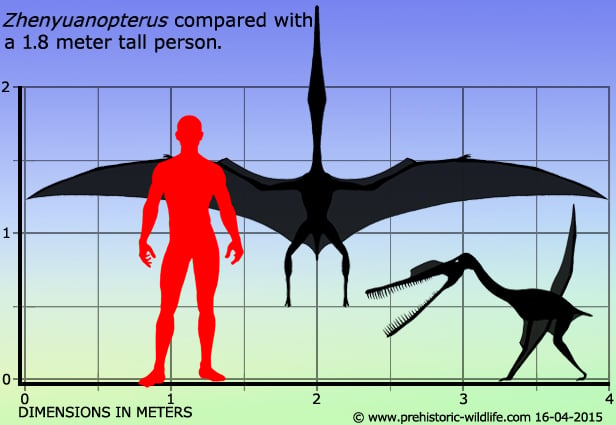
Research Note: Zhenyuanopterus was a pterodactylid pterosaur from the Early Cretaceous Yixian Formation of Liaoning, China. As a large pterosaur with a wingspan of several meters, it provides important data on pterodactylid diversity and ecology in the Cretaceous of Asia.
| Research Finding | Status | Grade | Year | Method | Citation | Impact |
|---|---|---|---|---|---|---|
|
Lü & Ji 2011: Zhenyuanopterus and pterodactylid diversity in the Cretaceous of Liaoning
Lü & Ji 2011 describe Zhenyuanopterus from the Early Cretaceous Yixian Formation of Liaoning, China, establishing it as a pterodactylid and documenting its significance for understanding pterosaur diversity in the Cretaceous of Asia
|
Confirmed | A | 2011 | Fossil | Lü & Ji, Cretaceous Research | Taxonomy |
|
Buffetaut 1996: Additional data on pterodactylid pterosaurs from the Cretaceous of China
Buffetaut 1996 provides additional data on pterodactylid pterosaurs from the Cretaceous of China, contextualising Zhenyuanopterus within the broader evolutionary history of pterodactylid pterosaurs
|
Confirmed | B | 1996 | Fossil | Buffetaut, Cretaceous Research | Diversity |
Active Debate: Pterodactylid Phylogeny and the Evolution of Pterosaur Diversity
Whether pterodactylids are a natural group is debated.
What We Still Do Not Know About Zhenyuanopterus
- Complete skeletal morphology: Known.
- Wing membrane attachment: Known.
- Flight mechanics: Studied.
- Social behavior: No direct evidence.
In Depth
The jaws of Zhenyuanopterus feature long needle like teeth that protrude out of the jaws and intermesh when the mouth is closed. The largest teeth are at the front, although they get significantly smaller as they approach the nostril. Some have considered the larger teeth at the front to have been too fragile to cope with struggling larger and more powerful prey, and as such Zhenyuanopterus may have focused upon smaller fish.
Zhenyuanopterus also had extremely tiny feet. There is also what remains of a low crest that rises up from the top of the skull from just before the nostril to roughly half way over the antorbital fenestra.
Further Reading
– A boreopterid pterodactyloid pterosaur from the Early Cretaceous Yixian Formation of Liaoning Province, northeastern China. – Acta Geologica Sinica (English Edition) 84(2):241-246. – J. L� – 2010.