Turanoceratops

Tu-ran-o-se-rah-tops.
Updated on

John Stewart

Paleoecologist

John Stewart is a distinguished paleoecologist whose work has significantly advanced our understanding of prehistoric ecosystems. With over two decades dedicated to unearthing fossils across Asia and Africa

Cite Feedback Print

Name

Turanoceratops ‭(‬Turan horned face‭)‬.

Phonetic

Tu-ran-o-se-rah-tops.

Named By

L.‭ ‬A.‭ ‬Nessov,‭ ‬L.‭ ‬F.‭ ‬Kaznyshkina‭ & ‬G.‭ ‬O.‭ ‬Cherepanov‭ ‬-‭ ‬1989.

Classification

Chordata,‭ ‬Reptilia,‭ ‬Dinosauria,‭ ‬Ornithischia,‭ ‬Ceratopsoidea.

Diet

Herbivore.

Species

T.‭ ‬tardabilis‭

Size

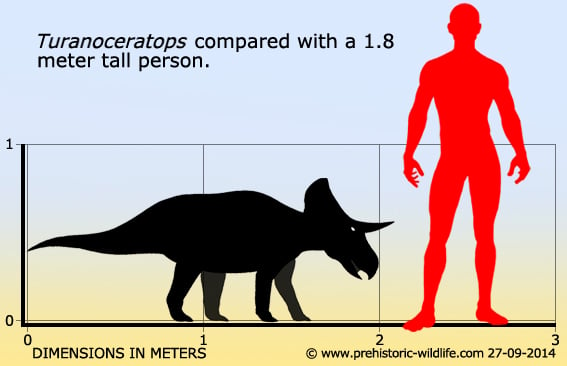
Estimated about‭ ‬2‭ ‬meters long.

Known locations

Uzbekistan‭ ‬-‭ ‬Bissekty Formation.

Time Period

Turonian of the Cretaceous.

Fossil representation

Partial remains of several individuals.

Turanoceratops: Research Database

Ceratopsidae (Ornithischia) · Late Cretaceous (~90-85 MYA) · Asia — Uzbekistan (Bissekty Formation)


Research Note: Turanoceratops was a ceratopsid dinosaur from the Late Cretaceous of Uzbekistan — one of the few known ceratopsids from Asia and an important taxon for understanding ceratopsid evolution and biogeography.


Research Finding Status Grade Year Method Citation Impact
Sues & Averianov 2009: Turanoceratops and new data on ceratopsid dinosaurs from the Cretaceous of Asia
Sues & Averianov 2009 provide comprehensive data on Turanoceratops from the Late Cretaceous of Uzbekistan, establishing it as a ceratopsid and documenting ceratopsid diversity in the Cretaceous of Asia
Confirmed A 2009 Fossil Sues & Averianov, Naturwissenschaften Taxonomy
Farke & Sampson 2009: Turanoceratops and additional data on ceratopsid systematics and biogeography
Farke & Sampson 2009 provide additional data on Turanoceratops and ceratopsid systematics, further contextualising its significance within Ceratopsidae
Confirmed B 2009 Fossil Farke & Sampson, Naturwissenschaften Systematics
Status:
Confirmed Direct evidence
Grade:
A Strong consensus
B Good evidence


Active Debate: Ceratopsid Biogeography and the Asia-North America Connection

Whether ceratopsids like Turanoceratops were endemic to Asia or part of a broader Asian-North American dinosaur fauna is debated. The biogeographic history of ceratopsids — and faunal exchange between Asia and North America — is key to understanding ceratopsid evolution.


What We Still Do Not Know About Turanoceratops

  • Complete skeletal morphology: Partial specimen known.
  • Diet: Likely herbivorous.
  • Social behavior: No direct evidence.
  • Frill: Partial frill known.

In Depth

       There is some confusion about Turanoceratops,‭ ‬given that we know that it was a ceratopsian dinosaur,‭ ‬but not all palaeontologists agree upon exactly what kind.‭ ‬Papers published by Sues and Averianov in‭ ‬2009‭ ‬support the idea that Turanoceratops was a transitional form that linked primitive ceratopsians of the Ceratopsoidea,‭ ‬with the more advanced ceratopsids‭ (‬think Triceratops,‭ ‬Styracosaurus,‭ ‬etc‭)‬.‭ ‬If correct then this would make Turanoceratops the first ceratopsid ceratopsian dinosaur known from Asia.

       A counter publication by Farke et al‭ (‬also published in‭ ‬2009‭)‬,‭ ‬was of the opinion that Turanoceratops was not a transitional form,‭ ‬but instead actually represented a sister group of ceratopsian dinosaurs,‭ ‬more distinct that primitive forms,‭ ‬yet distinct from ceratopsids.‭ ‬A second paper by Sues and Averimov refuted this,‭ ‬saying that the authors of the other paper were misidentifying the features seen on‭ ‬the‭ ‬Turanoceratops fossils.‭ ‬Then in‭ ‬2010‭ ‬a fourth paper was published by Xu et al which was of the opinion that Turanoceratops was more advanced than Zuniceratops‭ (‬a genus that represents the earliest known appearance of a horned dinosaur in North America‭)‬,‭ ‬yet was not advanced enough to be included within the Ceratopsidae.

       Classification issues aside,‭ ‬Turanoceratops was typical of early quadrupedal ceratopsian dinosaurs and at two meters long of a fairly small size.‭ ‬When compared to other genera,‭ ‬Turanoceratops is often credited as being similar to the aforementioned Zuniceratops.‭ ‬Turanoceratops would have lived in an ecosystem that also saw the presence of dinosaurs such as hadrosaurs,‭ ‬ankylosaurs,‬oviraptosaurs,‭ ‬ornithomimosaurs,‭ ‬troodonts and dromaeosaurs as well as other‭ ‬Mesozoic reptiles such as azhdarchid pterosaurs.

Further Reading

-‭ [‬Mesozoic ceratopsian dinosaurs and crocodiles of central Asia‭]‬.‭ ‬In Bogdanova and Khozatskii‭ (‬eds.‭)‬,‭ ‬Theoretical and Applied Aspects of Modern Palaeontology‭ ‬144-154.‭ ‬-‭ L.‭ ‬A.‭ ‬Nessov,‭ ‬L.‭ ‬F.‭ ‬Kaznyshkina‭ & ‬G.‭ ‬O.‭ ‬Cherepanov‭ ‬-‭ ‬1989. -‭ ‬Turanoceratops tardabilis—the first ceratopsid dinosaur from Asia.‭ ‬-‭ ‬Naturwissenschaften.‭ ‬-‭ ‬H.‭ ‬-D.‭ ‬Sues‭ & ‬A.‭ ‬Averianov‭ ‬-‭ ‬2009. -‭ ‬Turanoceratops tardabilis—sister taxon,‭ ‬but not a ceratopsid.‭ ‬-‭ ‬Naturwissenschaften.‭ ‬A.‭ ‬Farke,‭ ‬S.‭ ‬D.‭ ‬Sampson,‭ ‬C.‭ ‬A.‭ ‬Forster‭ & ‬M.‭ ‬A.‭ ‬Lowen‭ ‬-‭ ‬2009. -‭ ‬Phylogenetic position of Turanoceratops‭ (‬Dinosauria:‭ ‬Ceratopsia‭)‬.‭ ‬-‭ ‬Naturwissenschaften.‭ ‬-‭ ‬H.‭ ‬D.‭ ‬Sues‭ & ‬A.‭ ‬Averianov‭ ‬-‭ ‬2009. -‭ ‬First ceratopsid dinosaur from China and its biogeographical implications.‭ ‬-‭ ‬Chinese Science Bulletin‭ ‬55‭(‬16‭)‬:1631-1635‭ ‬-‭ ‬X.‭ ‬Xu,‭ ‬K.‭ ‬-B Wang‭ & ‬D.‭ ‬-J.‭ ‬Li‭ ‬-‭ ‬2010.

Adopt A Species
prehistoric-wildlife new logo

Love this species?

Adopt it today!

(UPDATED!)

SPECIES SPOTLIGHT

Velociraptor
Pectinodon