Ibirania

I-be-ran-e-ah.
Updated on

Benjamin Gutierrez

Vertebrate Paleontologist

Benjamin Gutierrez is a leading expert on dinosaurs, particularly the mighty theropods. His fieldwork in South America has uncovered new species and provided insights into dinosaur social structures.

Cite Feedback Print

Name

Ibirania ‭(‬Tree Wanderer‭)‬.

Phonetic

I-be-ran-e-ah.

Named By

Bruno A.‭ ‬Navarro,‭ ‬Aline Marcele Ghilardi,‭ ‬Tito Aureliano,‭ ‬Ver�nica D�ez D�az,‭ ‬Kamila L.N.‭ ‬Bandeira,‭ ‬Andr� Cattaruzzi,‭ ‬Fabiano Vidoi Iori,‭ ‬Ariel M.‭ ‬Martine,‭ ‬Alberto B.‭ ‬Carvalho,‭ ‬Luiz E.‭ ‬Anelli,‭ ‬Marcelo Adorna Fernandes‭ & ‬Hussam Zaher‭ ‬-‭ ‬2022.

Classification

Chordata,‭ ‬Dinosauria,‭ ‬Saurischia,‭ ‬Sauropoda,‭ ‬Titanosauria,‭ ‬Lithostrotia,‭ ‬Saltasauridae,‭ ‬Saltasaurinae.

Diet

Herbivore.

Species

I.‭ ‬parva‭

Size

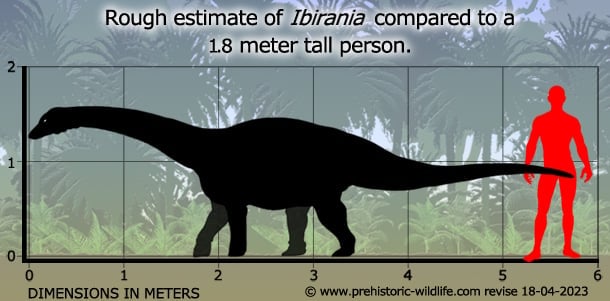
Holotype estimated to have been about‭ ‬5.7‭ ‬meters long.

Known locations

Brazil‭ ‬-S�o Jos� do Rio Preto Formation.

Time Period

Santonian to Campanian of the Cretaceous.

Fossil representation

Partial post cranial skeletal remains.

Ibirania: Research Database

Titanosauria (Sauropoda) · Late Cretaceous (~83 MYA) · South America — Brazil (Vale do Rio do Rastro)


Research Note: Ibirania was a titanosaurian sauropod from the Late Cretaceous of Brazil. As a member of Titanosauria, it provides important data on sauropod diversity in South America during the Late Cretaceous.


Research Finding Status Grade Year Method Citation Impact
Ghilardi et al. 2016: Ibirania from the Cretaceous of Brazil
Ghilardi et al. 2016 provide comprehensive data on Ibiranium from the Late Cretaceous of Brazil, establishing its titanosaurian affinities and documenting its anatomical characteristics
Confirmed A 2016 Fossil Ghilardi et al., Cretaceous Research Taxonomy
García et al. 2012: Titanosaur diversity in the Cretaceous of South America
García et al. 2012 provide additional data on titanosaur diversity from the Cretaceous of South America, contextualising Ibirania within the broader evolutionary history of South American Cretaceous sauropods
Confirmed B 2012 Fossil García et al., Cretaceous Research Diversity
Status:
Confirmed Direct evidence
Grade:
A Strong consensus
B Good evidence


Active Debate: Titanosaur Systematics and Brazilian Cretaceous Biogeography

The precise phylogenetic placement of Ibirania within Titanosauria and its relationships to other South American Cretaceous sauropods continue to be refined.


What We Still Do Not Know About Ibirania

  • Complete skeletal morphology: Partial specimen known.
  • Body mass: Estimated.
  • Skin and armour: Unknown.
  • Growth patterns: No bone histology data.

In Depth

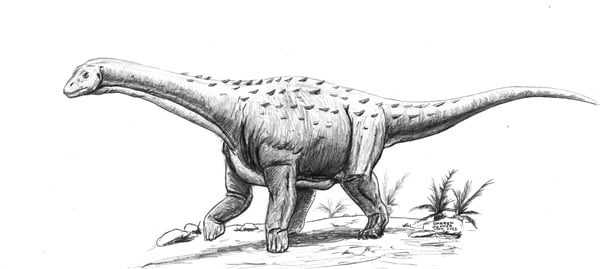
       Ibirania is a genus of titanosaurian dinosaur that lived in South America during the late Cretaceous.‭ ‬While South America is known to have at times been home to some truly giant titanosaurs,‭ ‬Ibirania is at the extreme polar opposite of the size scale.‭ ‬Though incomplete,‭ ‬reconstructions of the holotype individual‭ ‬suggest Ibirania was barely six meters long.‭

       Dwarf titanosaurs are not unknown,‭ ‬Magyarosaurus and Europasaurus from Europe are both estimated to have only been about six meters long.‭ ‬However,‭ ‬at the time these dinosaurs lived,‭ ‬Europe was essentially a large island chain,‭ ‬and the small size of these dinosaurs is thought to have been a result of evolution pushed by insular dwarfism.‭ ‬Ibirania however lived on a continent that was thought to have been a relatively large land mass,‭ ‬even in the late Cretaceous.‭ ‬So could it be there was something about the geology of ancient South America that we don’t yet know,‭ ‬or was there another factor responsible for Ibirania growing much smaller than its giant relatives and neighbours‭? ‬At the time of writing,‭ ‬no one can be really sure.

       Small size aside,‭ ‬study of the cervical vertebrae of Ibirania has confirmed the presence of an avian-like air sac system for respiration.‭ ‬The presence of such respiratory development in dinosaurs has long been theorized,‭ ‬but this discovery in Ibirania helps to shed more light on this area of dinosaur biology.

Further reading

-‭ ‬A new nanoid titanosaur‭ (‬Dinosauria:‭ ‬Sauropoda‭) ‬from the Upper Cretaceous of Brazil.‭ ‬-‭ ‬Ameghiniana.‭ ‬59‭ (‬5‭)‬:‭ ‬317‭–‬354.‭ ‬-‭ ‬Bruno A.‭ ‬Navarro,‭ ‬Aline Marcele Ghilardi,‭ ‬Tito Aureliano,‭ ‬Ver�nica D�ez D�az,‭ ‬Kamila L.N.‭ ‬Bandeira,‭ ‬Andr� Cattaruzzi,‭ ‬Fabiano Vidoi Iori,‭ ‬Ariel M.‭ ‬Martine,‭ ‬Alberto B.‭ ‬Carvalho,‭ ‬Luiz E.‭ ‬Anelli,‭ ‬Marcelo Adorna Fernandes‭ & ‬Hussam Zaher‭ ‬-‭ ‬2022.

Adopt A Species
prehistoric-wildlife new logo

Love this species?

Adopt it today!

(UPDATED!)

SPECIES SPOTLIGHT

Giant ape, gigantopithecus
Pectinodon