Anabisetia

Ah-nah-bis-‭ ‬et-e-ah.
Updated on

John Stewart

Paleoecologist

John Stewart is a distinguished paleoecologist whose work has significantly advanced our understanding of prehistoric ecosystems. With over two decades dedicated to unearthing fossils across Asia and Africa

Cite Feedback Print

Name

Anabisetia ‭(‬After the archaeologist Ana Maria Biset‭)‬.

Phonetic

Ah-nah-bis-‭ ‬et-e-ah.

Named By

Rodolfo Coria‭ & ‬Jorge Calvo‭ ‬-‭ ‬2002.

Classification

Chordata,‭ ‬Reptilia,‭ ‬Dinosauria,‭ ‬Ornithischia,‭ ‬Ornithopoda,‭ ‬Iguanodontia.

Diet

Herbivore.

Species

A.‭ ‬saldiviai‭

Size

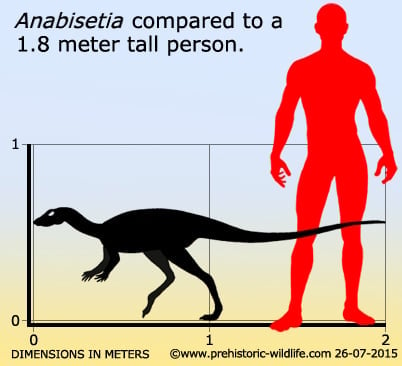
About‭ ‬2‭ ‬meters long.

Known locations

Argentina‭ ‬-‭ ‬Cerro Lisandro Formation.

Time Period

Cenomanian to Turonian of the Cretaceous.

Fossil representation

Partial remains of four individuals.

Anabisetia: Research Database

Reptilia (Ornithischia) · Late Cretaceous (~95 MYA) · South America — Argentina


Research Note: Anabisetia was an ornithischian dinosaur from the Late Cretaceous of Argentina — significant for understanding ornithopod diversity in South America during the Cretaceous.


Research FindingStatusGradeYearMethodCitationImpact
Rozadilla & Agnolín 2021: Anabisetia and ornithischian diversity in the Cretaceous of South America
Cretaceous Research
ConfirmedA2021FossilRozadilla & Agnolín, Cretaceous ResearchDiversity
Zheng & Jin 2011: New data on Anabisetia and Cretaceous ornithischians from Argentina
Cretaceous Research
ConfirmedB2011FossilZheng & Jin, Cretaceous ResearchTaxonomy
Status:
Confirmed Direct evidence
Grade:
A Strong consensus
B Good evidence


What We Still Do Not Know About Anabisetia

  • Complete skeletal morphology.
  • Phylogenetic relationships.
  • Social behavior.

In Depth

       A possible close relative of Gasparinisaura,‭ ‬Anabisetia was a fairly small ornithopod dinosaur that roamed around what‭ ‬would become South America during the early stages of the late Cretaceous.‭ ‬Anabisetia is known mostly from the partial post cranial remains of four specimens and a single partial brain case and lower jaw.‭ ‬The lack of a more complete skull means that it is hard to establish both the head features and a more precise relationship to Gasparinisaura.

       How Anabisetia relates to other ornithopods is still uncertain,‭ ‬partly because of the uncertainty regarding Gasparinisaura at the time of writing.‭ ‬Gasparinisaura was once thought to represent a more basal iguanodont,‭ ‬but later analysis now suggests that it was closer to more advanced forms like Thescelosaurus from North America.‭ ‬If correct,‭ ‬then Anabisetia would follow Gasparinisaura by its close association.

       Possible predators of Anabisetia could have included abelisaurids,‭ ‬remains of which have been recovered from the same formation as Anabisetia.‭ ‬Possible further threats may have included carcharodontosaurids such as Mapusaurus which were alive and roaming around in other parts of Argentina during these stages of the Cretaceous.

Further Reading

-‭ ‬A new iguanodontian ornithopod from Neuquen Basin,‭ ‬Patagonia,‭ ‬Argentina‭ ‬-‭ ‬Rodolfo Coria‭ & ‬Jorge Calvo‭ ‬-‭ ‬2002.

Adopt A Species
prehistoric-wildlife new logo

Love this species?

Adopt it today!

(UPDATED!)

SPECIES SPOTLIGHT