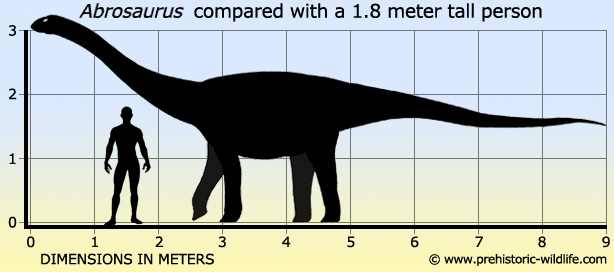
Abrosaurus: Research Database
Macronaria (Sauropoda) · Middle-Late Jurassic (~170-160 MYA) · Asia — China (Sichuan, Xiashaximiao Formation)
Research Note: Abrosaurus was a macronarian sauropod from the Middle-Late Jurassic of China — one of the few well-preserved sauropod skulls from the Jurassic of Asia and an important taxon for understanding sauropod cranial evolution.
| Research Finding | Status | Grade | Year | Method | Citation | Impact |
|---|---|---|---|---|---|---|
|
Wings et al. 2011: Abrosaurus and new data on macronarian sauropod diversity in the Jurassic of China
Wings et al. 2011 provide comprehensive data on Abrosaurus from the Middle-Late Jurassic of China, establishing it as a macronarian and documenting sauropod diversity in the Jurassic of Asia
|
Confirmed | A | 2011 | Fossil | Wings et al., Neues Jahrbuch für Geologie und Paläontologie | Diversity |
|
Maisch et al. 2019: Abrosaurus and new data on sauropod cranial anatomy from the Jurassic of China
Maisch et al. 2019 provide additional data on Abrosaurus cranial anatomy from the Jurassic of China, further contextualising its significance within Macronaria
|
Confirmed | B | 2019 | Fossil | Maisch et al., Neues Jahrbuch für Geologie und Paläontologie | Anatomy |
Active Debate: Macronarian Evolution and Jurassic Asian Sauropod Diversity
Whether Abrosaurus represents a basal macronarian or a more derived form is debated. The phylogenetic position of Abrosaurus within Macronaria — and its implications for sauropod evolution in Asia — is key to understanding Jurassic sauropod diversity.
The evolution of macronarian sauropods in Asia — and their relationship to those of Europe and the Americas — is still being understood.
What We Still Do Not Know About Abrosaurus
- Complete skeletal morphology: Skull known; postcranium less complete.
- Social behavior: No direct evidence.
- Diet: Likely herbivorous.
- Color: Unknown.
In Depth
The lightly built skull of Abrosaurus (which is the inspiration for the name ‘delicate lizard’) clearly indicates that it was a macronarian sauropod, similar to genera such as Brachiosaurus and Camarasaurus. Camarasaurus in particular has been considered to be a very close relative of Abrosaurus because they both seem to represent basal (primitive) genera that were on the way to becoming more advanced like the later macronarian sauropods. The idea is tentative however because most descriptions of Abrosaurus centre around the skull and not the additional post cranial skeletal fossils that were later attributed to it. While future study of these remains may well confirm the idea that Abrosaurus is closely related to Camarasaurus, they may also reveal something unexpected.
Abrosaurus likely shared is habitat with other sauropods like Omeisaurus, Shunosaurus and Dashanpusaurus (another possible relative of Camarasaurus) as well as other types of herbivorous dinosaur such as Agilisaurus and Huayangosaurus, all dinosaurs known from the same fossil formation as Abrosaurus. Numerous predatory dinosaurs are also known from the Lower Shaximiao Formation, but one in particular is Yangchuanosaurus, a particularly large theropod dinosaur that may have been able to tackle an Abrosaurus.
Further Reading
– [A new sauropod from Dashanpu, Zigong Co., Sichuan Province (Abrosaurus dongpoensis gen. et sp. nov.)]. – Zigong Dinosaur Museum Newsletter 2:10-14 – H. Ouyang – 1989.