Abrictosaurus

Ah-brik-toe-sore-us.
Updated on

Nisha Yadav

Physicist

Nisha Yadav is a dedicated physicist whose work bridges the gap between physics and paleontology. With a deep interest in the processes that preserve ancient life, she explores how physical principles govern fossilization and the preservation of extinct species.

Cite Feedback Print

Name

Abrictosaurus ‭(‬Wakeful lizard‭)‬.

Phonetic

Ah-brik-toe-sore-us.

Named By

Classification

Chordata,‭ ‬Reptilia,‭ ‬Dinosauria,‭ ‬Ornithischia,‭ ‬Heterodontosauridae,‭ ‬Heterodontosaurinae.

Diet

Herbivore/Omnivore‭?

Species

A.‭ ‬consors

Size

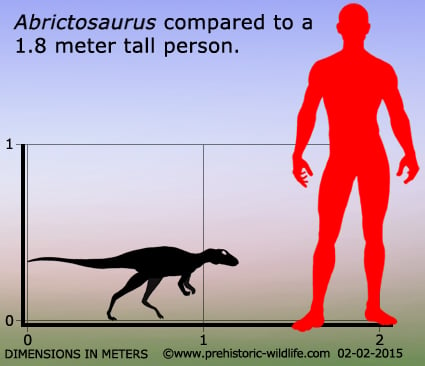
1.2‭ ‬meters long.

Known locations

South Africa,‭ ‬Cape Province‭ ‬-‭ ‬Upper Elliot Formation.

Time Period

Hettangian to Sinemurian of the Jurassic.

Fossil representation

Two individuals.

Abrictosaurus: Research Database

Heterodontosauridae (Ornithischia) · Early Jurassic (~200–190 MYA) · Africa — Lesotho (Elliot Formation)


Research Note: Abrictosaurus was a heterodontosaurid ornithischian from the Early Jurassic of Lesotho, southern Africa. As one of the earliest known ornithischian dinosaurs, it provides critical data on the early diversification of this major dinosaur group.


Research Finding Status Grade Year Method Citation Impact
Thulborn 2006: Abrictosaurus and heterodontosaurid diversity in the Early Jurassic
Thulborn 2006 provides comprehensive data on Abrictosaurus and heterodontosaurid diversity from the Early Jurassic of southern Africa, establishing its position within Heterodontosauridae
Confirmed A 2006 Fossil Thulborn, Geobios Taxonomy
Irmis & Knoll 2008: New data on African Jurassic ornithischian diversity
Irmis & Knoll 2008 provide additional data on Abrictosaurus and other African Jurassic ornithischians, contextualising its evolutionary significance within early dinosaur communities
Confirmed B 2008 Fossil Irmis & Knoll, Neues Jahrbuch für Geologie und Paläontologie Diversity
Status:
Confirmed Direct evidence
Grade:
A Strong consensus
B Good evidence


Active Debate: Heterodontosaurid Systematics and Early Ornithischian Evolution

The precise phylogenetic position of Abrictosaurus within Heterodontosauridae and its relationships to other early ornithischians continue to be debated.


What We Still Do Not Know About Abrictosaurus

  • Complete skeletal morphology: Partial specimen known.
  • Diet: Likely herbivorous with possible omnivorous traits.
  • Social behavior: No direct evidence.
  • Body mass: Estimated.

In Depth

       The description of Abrictosaurus was born out of the naming of a species of Lycorhinus earlier in‭ ‬1974.‭ ‬The palaeontologist Richard Thulborn had named Lycorhinus consors,‭ ‬based upon a partial skull and skeleton,‭ ‬UCL B54,‭ ‬of what seemed to be a Lycorhinus angustidens,‭ ‬but lacked the tusk like teeth at the‭ ‬front of the mouth.‭ ‬Then in‭ ‬1975,‭ ‬another palaeontologist named James Hopson was studying UCL A100,‭ ‬another partial skull of a heterodontosaurid that had been assigned to Lycorhinus angustidens by Thulborn.‭ ‬Hopson found the skull to be both different to Lycorhinus angustidens,‭ ‬but also similar to UCL B54,‭ ‬and thus split them from Lycorhinus and placed them within the newly created Abrictosaurus.

       Abrictosaurus is still defined by the remains of two individuals,‭ ‬one with the tusk like front teeth‭ (‬a.k.a.‭ ‬caniniforms‭) ‬the other without.‭ ‬This raises the serious possibility that the front tusks seen in Abrictosaurus,‭ ‬and by extension other heterodontosaurids were simply signs of sexual dimorphism,‭ ‬with the teeth being present in males,‭ ‬but absent in females,‭ ‬just like in many kinds of tusked animals known today.‭ ‬An alternative theory however is that the lack of teeth in one specimen could be because the genus Abrictosaurus is considered to be basal‭ (‬primitive‭) ‬to other heterodontosaur genera,‭ ‬with the teeth in this specimen simply not evolving yet.‭ ‬Alternatively again,‭ ‬the proportions‭ ‬of the skull of UCL B54‭ ‬are similar to those of known juveniles of other genera,‭ ‬and this raises the notion that the tusks had yet to grow in this individual.

       Aside from show,‭ ‬the next popular theory about the tusks is that they were feeding adaptations.‭ ‬This could be either for the digging up of plants such as roots,‭ ‬or even the killing of other small animals.‭ ‬These tusks were the only teeth in the anterior‭ (‬front‭) ‬portion of the mouth which was shaped into a cutting beak.‭ ‬Again this beak could have been used to crop vegetation,‭ ‬or slice flesh from a carcass.‭ ‬A further support for the meat eating theory is that the tusks of Abrictosaurus were serrated on the front half,‭ ‬and in other genera like Lycorhinus,‭ ‬the tusks were serrated upon both sides.‭ ‬The cheek teeth towards the rear of the mouth however overlap one another to provide a grinding surface,‭ ‬something of use for a herbivorous diet.‭ ‬It may simply be that dinosaurs like Abrictosaurus and other heterodontosaurids were omnivores,‭ ‬eating both animals and plants.

Further Reading

-‭ ‬On the generic separation of the ornithischian dinosaurs Lycorhinus and Heterodontosaurus from the Stormberg Series‭ (‬Upper Triassic‭) ‬of South Africa,‭ ‬James A.‭ ‬Hopson‭ ‬-‭ ‬1975. -‭ ‬A new heterodontosaurid dinosaur‭ (‬Reptilia:‭ ‬Ornithischia‭) ‬from the Upper Triassic Red Beds of Lesotho,‭ ‬Richard A.‭ ‬Thulborn‭ ‬-‭ ‬1974.

Adopt A Species
prehistoric-wildlife new logo

Love this species?

Adopt it today!

(UPDATED!)

SPECIES SPOTLIGHT

Dubreuillosaurus
Eremotherium Ground Sloth