In Depth
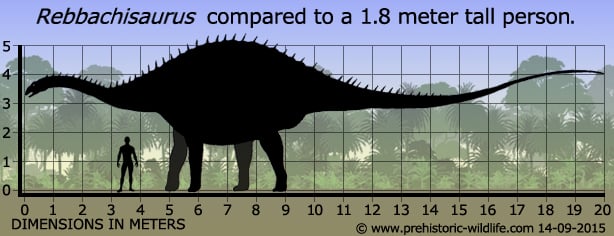
One of the most notable details of Rebbachisaurus are the tall neural spines of the vertebrae, which either stood proud from the back, or supported a sail or hump that ran along the spine. Aside from this Rebbachisaurus was a fairly generic diplodocid sauropod with a large build, long neck and whip-like tail. However, the discovery of another very similar genus of sauropod called Rayososaurus in Argentina has raised the notion that South America and Africa may have been joined by a land bridge for longer than previously thought. The idea of the two being joined has always been around, since the two continents seem to have almost matching types of dinosaurs (for example, spinosaurids and carcharodontosaurids) during the Early Cretaceous. If the two continents were joined for longer, then that raises the possibility for what may one day be found in a place like South America which was for a long time assumed to have been completely isolated from the other continents early on in the Cretaceous.
Further Reading
- Sur les dinosauriens du Continental Intercalaire des Kem-Kem de la Daoura [On the dinosaurs from the Continental Intercalaire of the Kem Kem of the Doura], R. Lavocat - 1954. – Rebbachisaurus tessonei sp. nov. A new sauropod from the Albian-Cenomanian of Argentina; new evidence on the origin of the Diplodocidae. – GAlA No 11, pp. 13-33. – G. O. Calvo & L. Salgado – 1995. – Osteology of Rebbachisaurus garasbae Lavocat, 1954, a diplodocoid (Dinosauria, Sauropoda) from the early Late Cretaceous–aged Kem Kem beds of southeastern Morocco. – Journal of Vertebrate Paleontology. 35 (4). – J. A. Wilson & R. Allain – 2015.