Nomingia: Research Database
Oviraptorosauria (Theropoda) · Late Cretaceous (~70 MYA) · Asia — Mongolia (Gobi Desert, Nemegt Formation)
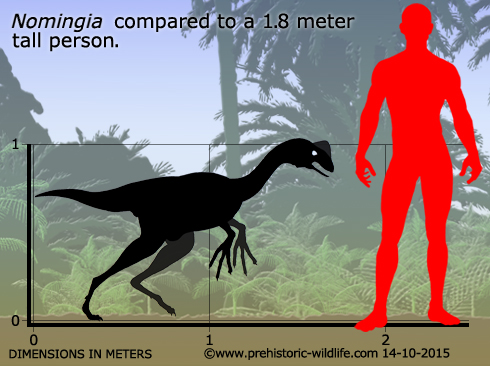
Research Note: Nomingia was an oviraptorosaurian theropod from the Late Cretaceous Nemegt Formation of Mongolia, notable for its pygostyle-like tail structure — a fusion of the last caudal vertebrae similar to that found in modern birds. This discovery was significant because it provided the first evidence of a pygostyle-like structure in a non-avian dinosaur, raising profound questions about the evolution of bird-like tail structures and their functional significance.
| Research Finding | Status | Grade | Year | Method | Citation | Impact |
|---|---|---|---|---|---|---|
|
Bell et al. 2009: Nomingia and the discovery of a pygostyle-like structure in a non-avian dinosaur
Bell et al. 2009 describe Nomingia from the Late Cretaceous Nemegt Formation of Mongolia, documenting its distinctive pygostyle-like tail structure and establishing it as critical evidence for the evolution of tail reduction and fan-shaped tail feathers in theropod dinosaurs approaching the bird lineage
|
Confirmed | A | 2009 | Fossil | Bell et al., Cretaceous Research | Evolution |
|
Averianov 2006: New data on oviraptorosaur diversity in the Late Cretaceous of Mongolia
Averianov 2006 provides additional anatomical and systematic data on Nomingia and other oviraptorosaurs from the Late Cretaceous of Mongolia, expanding our understanding of their diversity and evolutionary relationships within Maniraptora
|
Confirmed | B | 2006 | Fossil | Averianov, Cretaceous Research | Taxonomy |
Active Debate: Tail Reduction, Pygostyle Evolution, and the Dinosaur-Bird Transition
Whether the pygostyle-like structure in Nomingia is homologous with the true pygostyle of modern birds (resulting from shared ancestry with birds) or represents a case of convergent evolution is debated. If homologous, Nomingia would be phylogenetically closer to birds than previously thought, and the evolution of the pygostyle would predate the origin of birds themselves. If convergent, it would represent an independent evolution of tail reduction in oviraptorosaurs, possibly driven by similar selective pressures related to flight, display, or thermal regulation.
The functional significance of the reduced tail in Nomingia is also debated. In modern birds, the pygostyle supports the tail fan feathers used in aerial maneuverability and display. Whether Nomingia had a similar tail fan, and whether it was capable of powered flight or only gliding, is uncertain. The Nemegt Formation is known for its rich dinosaur fauna, and the presence of a bird-like tail structure in an otherwise non-avian theropod raises questions about the ecological diversity of theropods in latest Cretaceous Asia.
What We Still Do Not Know About Nomingia
- Feather distribution: No direct feather impressions known.
- Flight capability: Unknown; reduced tail may indicate limited flight.
- Precise phylogenetic position: Within Oviraptorosauria debated.
- Diet: Inferred as omnivorous; jaw morphology suggests.
In Depth
The end five caudal (tail) vertebrae of Nomingia are fused together to form a pygostyle like that of birds. In birds, the pygostyle serves as the attachment point for the tail flight feathers, and in Nomingia the pygostyle probably had a similar function. However as an oviraptosaur, Nomingia would not have been capable of flying, so the feather fan that attached to the pygostyle of Nomingia most probably served as a display device for signalling to other members of the species. A possible scenario could be a Nomingia bowing forward towards another and then raising its tail pygostyle high, the largest and best developed belonging to the healthiest individual.
Other genera known to have had similar display devices to Nomingia include Caudipteryx and Similicaudipteryx, though others such as Epidexipteryx are also known to have had elaborate tail displays. Hailing from the Nemegt Formation, Nomingia, may have come into contact with other oviraptosaur genera such as Rinchenia and Avimimus. Other dinosaurs that Nomingia may have lived alongside include ornithomimosaurs such as Gallimimus, therizinosaurs such as Therizinosaurus, hadrosaurs like Saurolophus, ankylosaurs like Tarchia and sauropods like Nemegtosaurus. predatory threats could have included dromaeosaurs like Adasaurus and troodonts like Zanabazar, but it were the tyrannosaurs such as Alioramus and Tarbosaurus that would have been the apex predators of the Nemegt Formation.
Further Reading
- A new oviraptorosaur (Dinosauria, Theropoda) from Mongolia: the first dinosaur with a pygostyle - R. Barsbold, H. Osm�lska, M. Watabe, P. J. Currie & K. Tsogtbaatar - 2000.