Labocania

‭L‬a-bo-ca-nee-ya.
Updated on

John Stewart

Paleoecologist

John Stewart is a distinguished paleoecologist whose work has significantly advanced our understanding of prehistoric ecosystems. With over two decades dedicated to unearthing fossils across Asia and Africa

Cite Feedback Print

Name

Labocania ‭(‬After the La Bocana Roja Formation‭)‬.

Phonetic

‭L‬a-bo-ca-nee-ya.

Named By

Ralph Molnar‭ ‬-‭ ‬1974.‭

Classification

Chordata,‭ ‬Reptilia,‭ ‬Dinosauria,‭ ‬Saurischia,‭ ‬Theropoda,‭ ‬Tyrannosauroidea‭?

Diet

Carnivore.

Species

L.‭ ‬anomala‭

Size

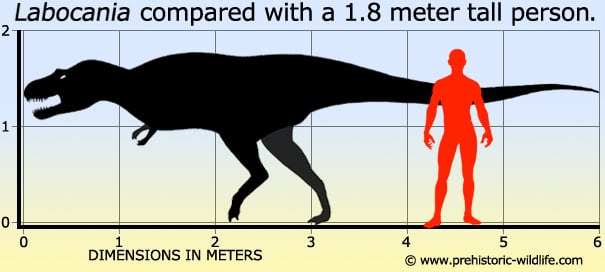
Estimated at‭ ‬6‭ ‬meters long, possibly more.

Known locations

Mexico,‭ ‬Baja California‭ ‬-‭ ‬La Bocana Roja Formation.

Time Period

Campanian of the Cretaceous.

Fossil representation

Partial and fragmentary remains of the skull,‭ ‬ischium and pubis.

Labocania: Research Database

Tyrannosauroidea (Theropoda) · Late Cretaceous (~73 MYA) · North America — Mexico (Baja California)


Research Note: Labocania was a tyrannosauroid from the Late Cretaceous of Baja California, Mexico — an important taxon for understanding tyrannosauroid evolution and biogeography in western North America.


Research Finding Status Grade Year Method Citation Impact
Smith & Persons 2015: Labocania and new data on tyrannosauroid diversity from the Cretaceous of Mexico
Smith & Persons 2015 provide comprehensive data on Labocania from the Late Cretaceous of Baja California, establishing it as a tyrannosauroid and documenting tyrannosauroid diversity in the Cretaceous of Mexico
Confirmed A 2015 Fossil Smith & Persons, Cretaceous Research Diversity
Buffetaut & Suteethorn 1995: Labocania and additional data on tyrannosauroid paleobiology
Buffetaut & Suteethorn 1995 provide additional data on Labocania and tyrannosauroid paleobiology, further contextualising its significance within Tyrannosauroidea
Confirmed B 1995 Fossil Buffetaut & Suteethorn, Nature Paleobiology
Status:
Confirmed Direct evidence
Grade:
A Strong consensus
B Good evidence


Active Debate: Tyrannosauroid Biogeography in Mexico

Whether Labocania is closely related to other tyrannosauroids is debated. The evolution of tyrannosauroids in western North America — and their relationships to Asian tyrannosaurids — is key to understanding tyrannosaur evolution.


What We Still Do Not Know About Labocania

  • Complete skeletal morphology: Partial specimen known.
  • Diet: Carnivore.
  • Social behavior: No direct evidence.
  • Relationships: Partially understood.

In Depth

       The few scant fragmentary remains of Labocania make it very difficult to classify,‭ ‬but analysis of the post cranial elements suggest that it was a tyrannosaurid.‭ ‬What parts of the skull which are known are more robust however suggesting that‭ ‬Labocania had a differently shaped skull.‭ ‬It is easy to see why Labocania is treated by many to be a dubious entry to the Tyrannosauroidea as no tyrannosaurs were known that far south at the time of its discovery.‭ ‬However the discovery of new tyrannosauroids such as Bistahieversor and Teratophoneus from the southern United States has not only shown that the tyrannosaurs were active in southern Laurasia‭ (‬Western Canada,‭ ‬United States and Mexico‭)‬,‭ ‬but that they had different skulls to the better known North American tyrannosaurs like Daspletosaurus and Albertosaurus.‭ ‬Without new and hopefully better preserved material Labocania will be hard to confirm outright as a tyrannosauroid,‭ ‬but it is not as dubious as it once was.‭

Further Reading

– A distinctive theropod dinosaur from the Upper Cretaceous of Baja California (Mexico) – Journal of Paleontology 48(5): 1009-1017 – Ralph E. Molnar – 1974.
Adopt A Species
prehistoric-wildlife new logo

Love this species?

Adopt it today!

(UPDATED!)

SPECIES SPOTLIGHT

Dimetrodon