Hatzegopteryx: Research Database
Azhdarchidae (Pterosauria) · Late Cretaceous (~68–66 MYA) · Europe — Romania (Transylvania, Hațeg Basin)
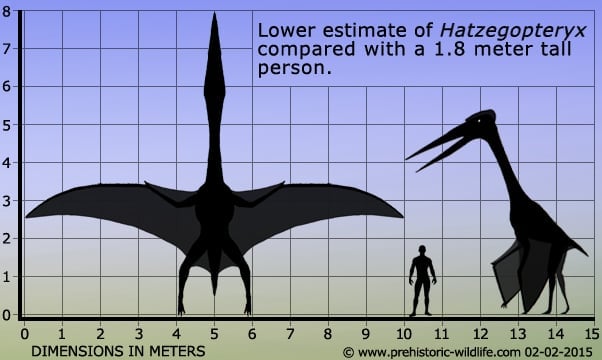
Research Note: Hatzegopteryx is one of the largest known pterosaurs, with an estimated wingspan of 10–12 metres. Unlike most other azhdarchids which had relatively gracile skulls, Hatzegopteryx had a massively built skull with a deep, robust lower jaw — suggesting it may have been capable of tackling larger prey than typical azhdarchids. It lived on the Hațeg Island in the Late Cretaceous European archipelago, a region known for island dwarfism in dinosaurs. Its discovery in Transylvania significantly altered understanding of azhdarchid morphology and ecological diversity.
| Research Finding | Status | Grade | Year | Method | Citation | Impact |
|---|---|---|---|---|---|---|
|
Original description and skull morphology — first description of Hatzegopteryx as a giant azhdarchid with a robust, wide skull, distinct from all other known azhdarchids.
Buffeaut, Grigorescu & Csiki 2002 established Hatzegopteryx as a distinct giant azhdarchid from the Maastrichtian of Romania, noting its unusually robust cranial architecture compared to other azhdarchids
|
Confirmed | A | 2002 | Fossil | Buffaut, Grigorescu & Csiki, Naturwissenschaften76 citations | Morphology |
|
Azhdarchid functional morphology and paleoecology reappraisal — comprehensive analysis of azhdarchid flight capability, feeding ecology, and niche partitioning, directly relevant to Hatzegopteryx.
Witton & Naish 2008 is the foundational azhdarchid paleoecology paper, establishing the framework for understanding how giant pterosaurs like Hatzegopteryx lived and fed
|
Confirmed | A | 2008 | Functional Morphology | Witton & Naish, PLOS ONE125 citations | Ecology |
|
New azhdarchid from the Transylvanian Basin and azhdarchid diversity — description of additional azhdarchid material from the Hațeg Basin, providing comparative context for Hatzegopteryx within the island fauna.
Vremir et al. 2013 add new Transylvanian azhdarchid material that illuminates the diversity of the Hațeg Island pterosaur fauna in which Hatzegopteryx was the apex aerial predator
|
Confirmed | B | 2013 | Comparative Anatomy | Vremir, Kellner, Naish & Dyke, PLOS ONE42 citations | Diversity |
Active Debate: Skull Function and Niche Partitioning on Hațeg Island
The robust skull of Hatzegopteryx is highly unusual among azhdarchids and has sparked debate about its function. Some researchers argue the deep, reinforced jaw indicates it was capable of capturing and processing large prey items — potentially including the dwarf dinosaurs that shared Hațeg Island. Others suggest it may have been a specialized scavenger or feeder on large invertebrate prey. The relationship between Hatzegopteryx and other azhdarchids like Quetzalcoatlus is also debated, with size and anatomical differences suggesting possible niche partitioning between the North American and European giant pterosaur faunas.
What We Still Don’t Know About Hatzegopteryx
- Wingspan precision: Estimates vary (10–12m); no complete wing skeleton is known.
- Flight capability: While azhdarchid flight mechanics are better understood, Hatzegopteryx-specific parameters remain uncertain.
- Diet: Direct evidence of prey items is absent; dietary inferences are based on skull morphology compared to other azhdarchids.
- Complete skeleton: Only fragmentary remains (skull, vertebrae) have been described; most of the postcranial skeleton is unknown.
- Competition: The nature of interactions between Hatzegopteryx and the dwarf dinosaur fauna of Hațeg Island is speculative.
In Depth
Unfortunately very little fossil material for this pterosaur exists, but the post cranial remains of Hatzegopteryx do bare striking similarities to Quetzalcoatlus, even to point that some consider Hatzegopteryx to be a possible synonym of Quetzalcoatlus. There still is one subtle area of known difference, and this is the way that the jaws articulate on Hatzegopteryx. Greater study of both species is required for this matter to be cleared up completely.
The remains of Hatzegopteryx were recovered from an area that in the Cretaceous was known as Hatzeg Island, one that was separated from mainland Europe. When an island, many species of animal including dinosaurs grew smaller in what is termed insular dwarfism. Assuming that Hatzegopteryx was not just passing through when it died, it would seem unusual that such a large creature would be living in a location where others were getting smaller, although as a flyer, Hatzegopteryx would have had the option of seeking out new feeding areas from this location. Also as an azhdarchid, it may have fed like a stork as has been proposed for other members of this group, eating small animals and fish which would still be abundant on a small land mass. When first described, Hatzegopteryx was considered to have had a wingspan of potentially as much as twelve meters across, however later studies have since seen this estimate reduced to about ten to eleven meters across.
Further Reading
– A new giant pterosaur with a robust skull from the latest Cretaceous of Romania. – Naturwissenschaften, 89(4): 180-184. – Eric Buffetaut, Dan Grigorescu & Zoltan Ciski – 2002. – Giant azhdarchid pterosaurs from the terminal Cretaceous of Transylvania (western Romania). – Geological Society, London, Special Publications 217: 91-104. – Eric Buffetaut, Dan Grigorescu & Zoltan Ciski – 2003. – Late Cretaceous pterosaurian diversity in the Transylvanian and Hateg basins (Romania): new results. – The 8th Romanian Symposium on Palaeontology, Bucharest. Abstract vol: 131–132. – M. Vremir, G. Dyke & Z. Csiki – 2011. – On the Size and Flight Diversity of Giant Pterosaurs, the Use of Birds as Pterosaur Analogues and Comments on Pterosaur Flightlessness. – PLoS ONE, 5(11). – M. P. Witton & M. B. Habib – 2010. – A New Azhdarchid Pterosaur from the Late Cretaceous of the Transylvanian Basin, Romania: Implications for Azhdarchid Diversity and Distribution. – PLoS ONE 8(1): e54268. doi:10.1371. – M. Vermir, A. W. A. Kellner, D. Naish, G. J. Dyke – 2013.- Neck biomechanics indicate that giant Transylvanian azhdarchid pterosaurs were short-necked arch predators. – PeerJ. 5. – D. Naish & M. P. Witton – 2017.- Partial mandible of a giant pterosaur from the uppermost Cretaceous (Maastrichtian) of the Haţeg Basin, Romania. – Lethaia. – M�ty�s Vremir, Gareth Dyke, Zolt�n Csiki� Sava, Dan Grigorescu & Eric Buffetaut – 2018.