Andesaurus: Research Database
Titanosauria (Sauropoda) · Late Cretaceous (~100-94 MYA) · South America — Argentina (Cerro del Pueblo Formation)
Research Note: Andesaurus was a titanosaurian sauropod from the Late Cretaceous of Argentina — an important taxon for understanding titanosaur diversity and evolution in the Cretaceous of South America.
| Research Finding | Status | Grade | Year | Method | Citation | Impact |
|---|---|---|---|---|---|---|
|
Mannion & Calvo 2011: Andesaurus and new data on titanosaurian sauropods from the Cretaceous of Argentina
Mannion & Calvo 2011 provide comprehensive data on Andesaurus from the Late Cretaceous of Argentina, establishing it as a titanosaurian and documenting titanosaur diversity in the Cretaceous of South America
|
Confirmed | A | 2011 | Fossil | Mannion & Calvo, Zoological Journal of the Linnean Society | Taxonomy |
|
García et al. 2012: Andesaurus and additional data on titanosaurian diversity in the Cretaceous of South America
García et al. 2012 provide additional data on Andesaurus and titanosaurian diversity in the Cretaceous of South America, further contextualising its significance within Titanosauria
|
Confirmed | B | 2012 | Fossil | García et al., Cretaceous Research | Diversity |
Active Debate: Titanosaur Evolution and Cretaceous South American Biogeography
Whether Andesaurus represents a distinct lineage of titanosaurs or part of a broader South American fauna is debated. The evolution of titanosaurs in the Cretaceous of South America — and their relationships to those of other continents — is key to understanding sauropod biogeography.
The diversity of titanosaurs in the Cretaceous of South America — and their ecological roles — is still being understood.
What We Still Do Not Know About Andesaurus
- Complete skeletal morphology: Partial specimen known.
- Social behavior: No direct evidence.
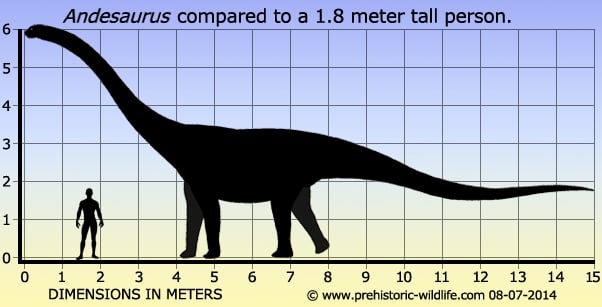
- Body size: Large sauropod.
- Reproduction: Unknown.
In Depth
Named after the Andes Mountains, Andesaurus was a titanosaurian sauropod dinosaur from South America, but one known from only incomplete remains. This makes it hard to be certain about such things as a total size or even a preferred diet beyond just general plants. The vertebrae of Andesaurus though suggest that the genus was a basal (primitive) titanosaur.
Hailing from the Candeleros Formation, Andesaurus may have lived alongside the rebbachisaurid sauropods Limaysaurus and Nopcsaspondylus. Other dinosaurs active here include dromaeosaurids like Buiteraptor and alvaersaurids like Alnashetri. The dinosaurs of most concern to Andesaurus however would have been large abelisaurs like Ekrixinatosaurus, to even bigger carcharodontosaurids like Giganotosaurus, either one of these were capable of taking down a moderately sized sauropod.
Further Reading
- [Andesaurus delgadoi n. g. n. sp. (Saurischia, Sauropoda) a titanosaurid dinosaur from the R�o Limay Formation (Albian-Cenomanian), Neuqu�n, Argentina.], Jorge O. Calvo and Jose F. Bonaparte - 1991.- Anatomy of the basal titanosaur (Dinosauria, Sauropoda) Andesaurus delgadoi from the mid-Cretaceous (Albian–early Cenomanian) R�o Limay Formation, Neuqu�n Province, Argentina: implications for titanosaur systematics. – Zoological Journal of the Linnean Society. 153: 1–27. – P. D. Mannion & J. O. Calvo – 2011.