Astrophocaudia

In Depth        Astrophocaudia was a genus of sauropod named in‭ ‬2012,‭ ‬and considered to be part of a group of sauropods called the Somphospondyli along with Sauroposeidon. Further Reading -‭ ‬Revision of the sauropod dinosaurs of the Lower Cretaceous Trinity Group,‭ ‬southern USA,‭ ‬with the description of a new genus,‭ ‬Michael D.‭ ‬D’Emic‭ ‬-‭ ‬2012.

Baalsaurus

In Depth        Not much is known about Baalsaurus other than it is a genus of titanosaurian dinosaur that lived in South America during the late Cretaceous.‭ ‬Baalsaurus is named after the‭ ‬Baal fossil site,‭ ‬which is named after the ancient‭ ‬Phoenician god Baal.‭ Further Reading -‭ ‬Baalsaurus mansillai gen.‭ ‬et sp.‭ ‬nov.‭ ‬a new titanosaurian … Read more

Ampelosaurus

In Depth        Along with Magyarosaurus,‭ ‬Ampelosaurus is currently one of the best known sauropods from Europe and is in fact another example of a Late Cretaceous era titanosaur.‭ ‬Remains of Ampelosaurus have been found in what would have been a floodplain in the late Cretaceous.‭ ‬However when the fossils were discovered they were now near … Read more

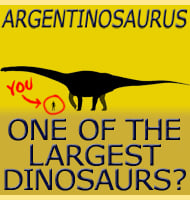
Argentinosaurus

Argentinosaurus

Argentinosaurus: Fossil Maps and Geological Chart Discover Argentinosaurus with our interactive fossil map and geographical timeline chart. The fossil map pinpoints discovery sites worldwide, click each marker to see fossil ages and detailed references.. The interactive bar chart reveals how many Argentinosaurus fossils were found across different geological ages, helping you visualize its prehistoric history … Read more

Vouivria

In Depth        Fossils of Vouivria were originally attributed to the dinosaur Bothriospondylus,‭ ‬however study of the fossils combined with the dubious status of Bothriospondylus meant that by the‭ ‬1980s the fossils that these fossils were no longer thought to be‭ ‬Bothriospondylus.‭ ‬In‭ ‬2017‭ ‬the fossils were used to describe their own genus,‭ ‬Vouivria.‭ ‬Vouivria was‭ … Read more

Atsinganosaurus

In Depth        Atsinganosaurus is named from the Ancient Greek word atsinganos which means‭ ‘‬gypsy‭’‬,‭ ‬and is a reference to a proposed east to west migration for these dinosaurs.‭ ‬The known remains of Atsinganosaurus are fragmentary but in otherwise a good state of preservation.‭ ‬Unfortunately the overall lack of them means that it is hard to … Read more

Omeisaurus

In Depth        With its incredibly long neck Omeisaurus is both a relative and possible comtempory to the more famous Mamenchisaurus.‭ ‬However previous Upper Shaximiao Formation fossils of Omeisaurus are now considered indeterminate.‭ ‬If Omeisaurus really‭ ‬does‭ ‬only exist in Lower Shaximiao deposits,‭ ‬then it may confirm that Mamenchisaurus replaced Omeisaurus since the former is only … Read more

Chondrosteosaurus

In Depth        When Ornithopsis was named by Harry Govier Seeley in‭ ‬1870,‭ ‬Seeley noted the pneumaticised vertebrae and considered Ornithopsis to represent a link between pterosaurs and birds.‭ ‬Richard Owen however said that he was wrong,‭ ‬the vertebra actually represented a kind of large marine reptile,‭ ‬though one that probably had a well-developed respiratory system.‭ … Read more

Mnyamawamtuka

In Depth        Certainly one of the more difficult dinosaur names to pronounce,‭ ‬Mnyamawamtuka is a genus of titanosaur that lived in Africa during the Cretaceous.‭ ‬The holotype of Mnyamawamtuka is recognised as one of the most complete titanosaurs ever discovered.‭ ‬The high level of completeness may be down to the fact that this creature was … Read more

Traukutitan

In Depth        Traukutitan is a genus of titanosaurian dinosaur that lived in South America during the late Cretaceous.‭ ‬Traukutitan was named after Trauku,‭ ‬an Araucanian mountain spirit.‭ ‬The species name T.‭ ‬eocaudata is a reference to the primitive appearing form of the caudal vertebrae.‭ ‬There is speculation that Traukutitan was a lognkosaurian titanosaur,‭ ‬and this … Read more