In Depth
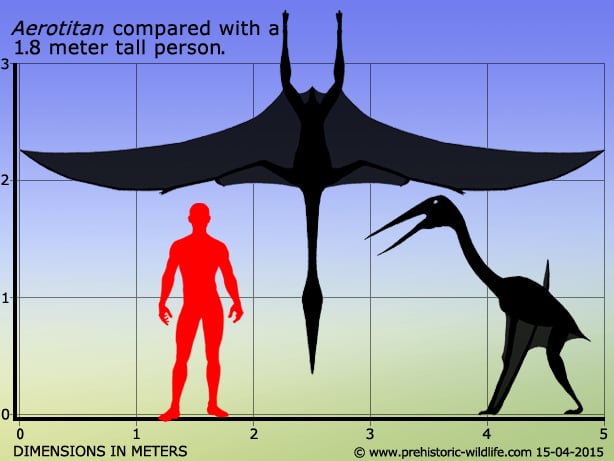
Although named from very little fossil remains, Aerotitan is thought to be one of the azdarchid pterosaurs, and if correct, this would make Aerotitan the first known confirmed azdarchid pterosaur from South America. The azdarchid pterosaurs are a special group noted for having proportionately long necks supported by lengthened cervical (neck) vertebrae. Some of these such as Quetzalcoatlus and Hatzegopteryx grew to truly gigantic sizes, but uncertainty has shrouded what they ate. Studies of azdarchids show that they would have been most comfortable while feeding on the ground since the long neck provided little support for the head against water resistance while feeding upon the wing. Popular thinking about azdarchids at the time of writing envisions them as living more like storks, sitting on the edge of a body of water and snatching fish from the shallows, or even stalking small vertebrates like lizards and mammals through dense but low growing vegetation.
Aerotitan was first described from fossils that were thought to represent the rostrum, a part of the upper jaws. Later analysis of the fossils however (P�gas et al) has led to an alternative hypothesis that they are actually part of the lower jaws.
Further Reading
- A new large pterosaur from the Late Cretaceous of Patagonia, Fernando Emilio Novas, Martin Kundrat, Federico Agnol�na, Mart�n Ezcurra, Per Erik Ahlberg, Marcelo Isasi, Alberto Arriagada & Pablo Chafrat - 2012. – On the pterosaur Aerotitan sudamericanus (Neuqu�n Basin, Upper Cretaceous of Argentina), with comments on azhdarchoid phylogeny and jaw anatomy. – Cretaceous Research. 129: Article 104998. – Rodrigo V.P�gas, BorjaHolgado, Leonardo D.Ortiz David, Mattia A.Baiano & Fabiana R.Costa – 2021.