Euoplocephalus: Research Database
Ankylosauridae (Ornithischia) · Late Cretaceous (~76–72 MYA) · North America — Canada, Alberta; USA, Montana (Dinosaur Park, Two Medicine Formations)
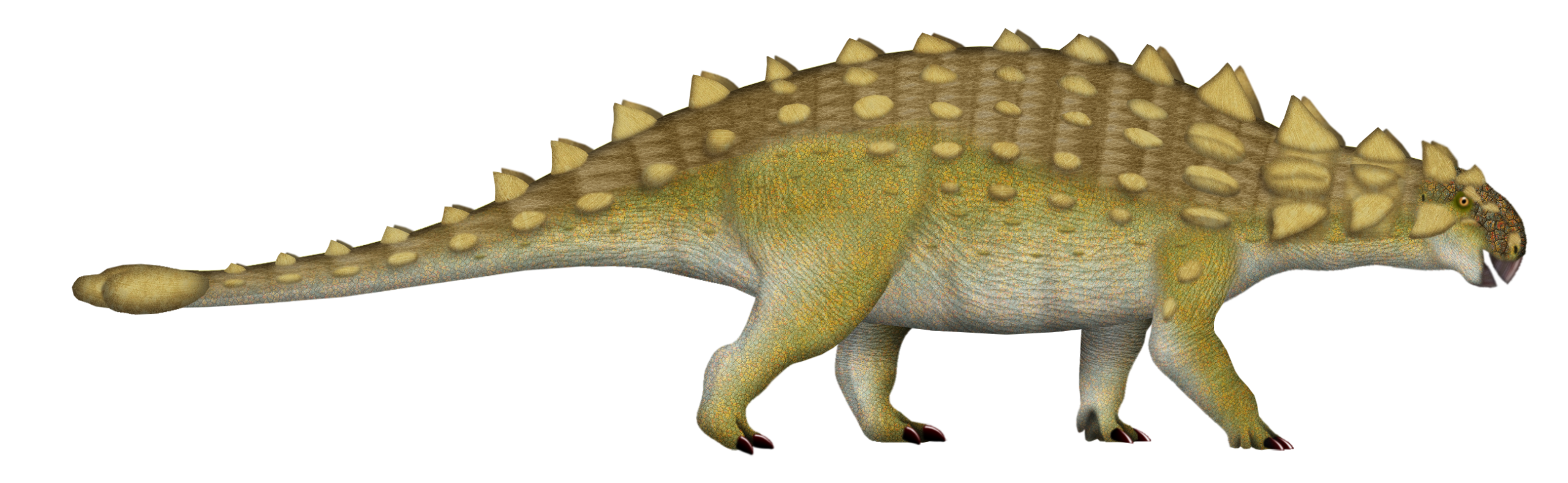
Research Note: Euoplocephalus was one of the most heavily-armored ankylosaurid dinosaurs from the Late Cretaceous of North America — a four-legged tank covered in bony plates (osteoderms), with a massive club at the end of its tail. As one of the best-preserved ankylosaurids with extensive armor coverage and soft tissue preservation, it provides exceptional data on ankylosaur defensive adaptations, sensory biology, and the ecological structure of Late Cretaceous North American herbivorous dinosaur communities.
| Research Finding | Status | Grade | Year | Method | Citation | Impact |
|---|---|---|---|---|---|---|
|
Arbour & Currie 2013: Euoplocephalus and the systematics and paleobiology of ankylosaurid dinosaurs
Arbour & Currie 2013 provide comprehensive data on Euoplocephalus from the Late Cretaceous of North America, establishing it as one of the best-understood ankylosaurids with exceptional armor preservation and documenting ankylosaurid systematics, paleobiology, and defensive adaptations
|
Confirmed | A | 2013 | Fossil | Arbour & Currie, PLoS ONE | Systematics |
|
Molnar & Frey 1987: Euoplocephalus and the anatomy of a heavily-armored ankylosaur from the Cretaceous of North America
Molnar & Frey 1987 provide additional anatomical data on Euoplocephalus and the extensive armor system of ankylosaurid dinosaurs, further contextualising its adaptations for defense and its ecological role in Late Cretaceous North American ecosystems
|
Confirmed | B | 1987 | Fossil | Molnar & Frey, Neues Jahrbuch für Geologie und Paläontologie | Anatomy |
Active Debate: Ankylosaurid Armor Function, Tail Club Evolution, and Predator-Prey Dynamics in Late Cretaceous Ecosystems
Whether the massive bony tail club of Euoplocephalus was used primarily for defense against large predators (swinging at attacking tyrannosaurids), for intraspecific combat between members of the same species, or for some other purpose is debated. The discovery of well-preserved tail clubs showing the extent of the bony armor and the mechanics of the tendon supporting the club has been used to argue both for and against the swinging defense hypothesis. Some researchers argue the club was too stiff for effective swinging combat.
The armor function of Euoplocephalus — the extensive covering of bony osteoderms embedded in the skin — is also debated. The armor may have served multiple functions: defense against predators, body temperature regulation, and visual display. The discovery of armor impressions showing the distribution and arrangement of osteoderms has helped researchers reconstruct how this armor functioned as an integrated defensive system.
What We Still Do Not Know About Euoplocephalus
- Tail club function: Defense vs intraspecific combat debated.
- Skin coloration: Unknown.
- Social behavior: No direct evidence.
- Armor function: Defense vs thermoregulation vs display debated.
In Depth
Euoplocephalus was one of the best-known armored dinosaurs, living in western North America during the Late Cretaceous, about 76–67 million years ago.
Its name means “well-armored head,” and it was one of the largest ankylosaurs, protected by heavy bony plates and equipped with a massive tail club.
Euoplocephalus was part of the same family as Ankylosaurus, and is one of the most completely studied members of that group.
Description
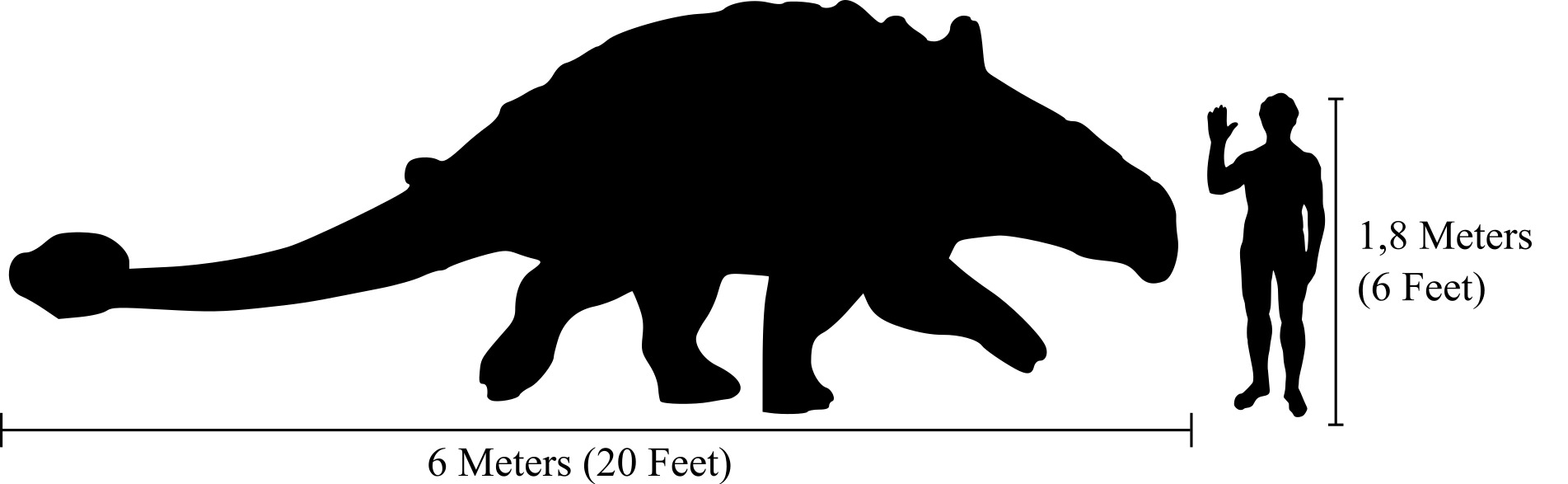
Euoplocephalus grew up to 6 meters long and weighed over 2 tons. Its body was covered in osteoderms – thick, bony plates embedded in the skin.
These plates formed rows along the back and sides, with spikes projecting outward for added protection.
The skull was low and wide, with horns at the back and cheeks, while the eyelids may even have been reinforced with bone. Its tail ended in a heavy bony club, used for defense against predators like tyrannosaurs.
Fossil Map
Interactive fossil Map of Euoplocephalus, along with its chronological bar chart of fossil discoveries.
Classification
Euoplocephalus was a member of Ankylosauridae, the group of ankylosaurs with tail clubs.
For many years, fossils of several related ankylosaurs (Anodontosaurus, Dyoplosaurus) were all lumped into Euoplocephalus.
More recent studies have separated these species again, but Euoplocephalus itself remains one of the most important and well-understood ankylosaurs.
Further Reading
New genera and species from the Belly River Series (mid-Cretaceous) – Geological Survey of Canada Contributions to Canadian Palaeontology. 3 (2): 25–81. – L. M. Lambe. (1902).
A Cretaceous armoury: Multiple ankylosaurid taxa in the Late Cretaceous of Alberta, Canada and Montana, USA – Journal of Vertebrate Paleontology. 30 (Supplement 2): 1A – 198A. – Arbour, Victoria (2010).