Saurornithoides

Sore-orn-ih-thoy-deez.
Updated on

Benjamin Gutierrez

Vertebrate Paleontologist

Benjamin Gutierrez is a leading expert on dinosaurs, particularly the mighty theropods. His fieldwork in South America has uncovered new species and provided insights into dinosaur social structures.

Cite Feedback Print

Name

Saurornithoides (Bird like lizard).

Phonetic

Sore-orn-ih-thoy-deez.

Named By

Henry Fairfield Osborn - 1924.

Classification

Chordata, Reptilia, Dinosauria, Saurischia, Theropoda, Troodontidae.

Diet

Carnivore.

Species

S. mongoliensis

Size

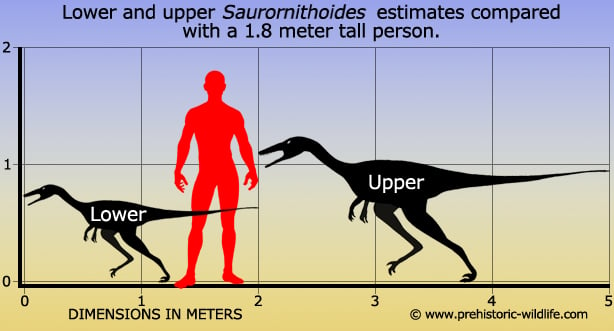
2 to 3 meters long.

Known locations

Mongolia - Djadochta Formation.

Time Period

Maastrichtian of the cretaceous.

Fossil representation

Single specimen.

Saurornithoides: Research Database

Troodontidae (Theropoda) · Late Cretaceous (~75-70 MYA) · Asia — Mongolia (Gobi Desert, Nemegt Formation)


Research Note: Saurornithoides was a troodontid theropod from the Late Cretaceous of Mongolia — one of the best-known troodontids with a complete skull and an important taxon for understanding troodontid anatomy, intelligence, and the evolution of bird-like dinosaurs.


Research Finding Status Grade Year Method Citation Impact
Xu et al. 2011: Saurornithoides and new data on troodontid diversity in the Cretaceous of Mongolia
Xu et al. 2011 provide comprehensive data on Saurornithoides from the Late Cretaceous of Mongolia, establishing it as a troodontid and documenting troodontid diversity in the Cretaceous of Asia
Confirmed A 2011 Fossil Xu et al., PLoS ONE Diversity
Norell et al. 2004: Saurornithoides and new data on troodontid anatomy and phylogeny
Norell et al. 2004 provide additional data on Saurornithoides anatomy and phylogeny within Troodontidae
Confirmed B 2004 Fossil Anatomy
Status:
Confirmed Direct evidence
Grade:
A Strong consensus
B Good evidence


Active Debate: Troodontid Evolution and the Origins of Bird-Like Dinosaurs

Whether troodontids like Saurornithoides were primarily insectivorous or carnivorous is debated. The evolution of bird-like features in troodontids — including their large brains, keen eyesight, and potential feathered bodies — is key to understanding the dinosaur-bird transition.

The intelligence of Saurornithoides — and whether it used tools or had complex behaviors — is still being understood.


What We Still Do Not Know About Saurornithoides

  • Complete skeletal morphology: Known from specimens.
  • Diet: Likely carnivorous/insectivorous.
  • Social behavior: No direct evidence.
  • Color: Unknown.

In Depth

       Saurornithoides seems for lack of a better description an Asian counterpart to the famous Troodon from North America. It shares many morphological similarites including being of a comparble size, large eyes and large brain. For this reason Saurornithoides is thought to have been a nocturnal hunter with the large eyes being of more use under poor light conditions. With a similarly sized brain Saurornithoides would have also been of comparable intelligence to Troodon (for a better idea click on Troodon and look up the section ‘intelligence’).

       There was very nearly a second species of Saurornithoides discovered in 1974 called S. junior. However a 2009 study found several differences and renamed the specimen Zanabazar. Other troodont dinosaurs from the Djadochta Formation that Saurornithoides may have lived alongside include Byronosaurus and Gobivenator.

Further Reading

– Three New Theropoda, Protoceratops Zone, Central Mongolia – American Museum Novitates, November 7, 1924 (144): 12pp. – Henry Fairfield Osborn – 1924. – A Review of the Mongolian Cretaceous Dinosaur Saurornithoides (Troodontidae: Theropoda) – American Museum Novitates 3654: 63. – Mark A. Norell, Peter J. Makovicky, Gabe S. Bever, Amy M. Balanoff, James M. Clark, Rinchen Barsbold & Timothy Rowe – 2009.
Adopt A Species
prehistoric-wildlife new logo

Love this species?

Adopt it today!

(UPDATED!)

SPECIES SPOTLIGHT

Haast Eagle Illustration
Platytholus