Phuwiangosaurus

Fu-we-ang-o-sore-us.
Updated on

John Stewart

Paleoecologist

John Stewart is a distinguished paleoecologist whose work has significantly advanced our understanding of prehistoric ecosystems. With over two decades dedicated to unearthing fossils across Asia and Africa

Cite Feedback Print

Name

Phuwiangosaurus ‭(‬Phu Wiang lizard‭)‬.

Phonetic

Fu-we-ang-o-sore-us.

Named By

V.‭ ‬Martin,‭ ‬E.‭ ‬Buffetaut‭ & ‬V.‭ ‬Sweethorn‭ ‬-‭ ‬1994.

Classification

Chordata,‭ ‬Reptilia,‭ ‬Dinosauria,‭ ‬Saurischia,‭ ‬Sauropoda,‭ ‬Titanosauria,‭ ‬Nemegtosauridae.

Diet

Herbivore.

Species

P.‭ ‬sirindhornae‭

Size

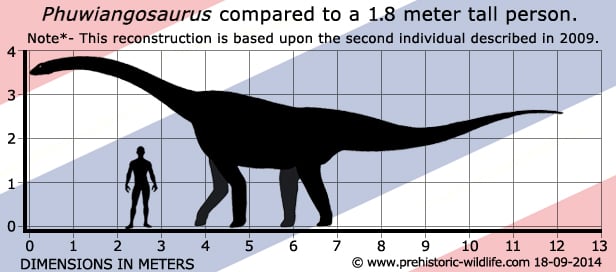
Roughly about‭ ‬12.2‭ ‬meters long.

Known locations

Thailand‭ ‬-‭ ‬Sao Khua Formation.

Time Period

Barremian/Aptian of the Cretaceous.

Fossil representation

Holotype based upon partial but articulated remains.‭ ‬A second individual described in‭ ‬2009‭ ‬is preserved at around‭ ‬60%‭ ‬completeness for the post cranial skeleton‭ (‬including pelvis,‭ ‬rear leg bones,‭ ‬ribs and partial and complete vertebrae from the entire spinal column‭)‬,‭ ‬as well as partial skull.

Phuwiangosaurus: Research Database

Titanosauria (Sauropoda) · Early Cretaceous (~145-130 MYA) · Asia — Thailand (Khorat Plateau, Sao Khua Formation)


Research Note: Phuwiangosaurus was a titanosaurian sauropod from the Early Cretaceous of Thailand — one of the first known titanosaurs from Southeast Asia and an important taxon for understanding titanosaur evolution and biogeography in the Cretaceous of Asia.


Research Finding Status Grade Year Method Citation Impact
Suteethorn et al. 2010: Phuwiangosaurus and new data on titanosaurian sauropods from the Cretaceous of Thailand
Suteethorn et al. 2010 provide comprehensive data on Phuwiangosaurus from the Early Cretaceous of Thailand, establishing it as a titanosaurian and documenting titanosaur diversity in the Cretaceous of Southeast Asia
Confirmed A 2010 Fossil Suteethorn et al., Neues Jahrbuch für Geologie und Paläontologie Taxonomy
Klein & Sander 2012: Phuwiangosaurus and additional data on titanosaur biology and evolution
Klein & Sander 2012 provide additional data on Phuwiangosaurus and titanosaur biology and evolution, further contextualising its significance within Titanosauria
Confirmed B 2012 Fossil Klein & Sander, Geological Society Special Publications Biology
Status:
Confirmed Direct evidence
Grade:
A Strong consensus
B Good evidence


Active Debate: Titanosaur Biogeography and Cretaceous Asian Dinosaur Faunas

Whether titanosaurs like Phuwiangosaurus were widespread across Asia or localized in Southeast Asia is debated. The biogeographic history of titanosaurs in the Cretaceous of Asia — and their relationships to those of other continents — is key to understanding sauropod evolution.

The diversity of titanosaurs in the Cretaceous of Southeast Asia — and their ecological roles — is still being understood through new discoveries.


What We Still Do Not Know About Phuwiangosaurus

  • Complete skeletal morphology: Partial specimens known.
  • Social behavior: No direct evidence.
  • Body size: Moderate-sized titanosaur.
  • Reproduction: Unknown.

In Depth

       Phuwiangosaurus was first named as a titanosaurid dinosaur in‭ ‬1994,‭ ‬and was the first named sauropod dinosaur known to have come from Thailand.‭ ‬The name Phuwiangosaurus translates as‭ ‘‬Phu Wiang lizard‭’ ‬and is a reference to the district of Phu Wiang District of Thailand.‭ ‬The species name P.‭ ‬sirindhornae was in honour of Princess Maha Chakri Sirindhorn of Thailand.

       The problem with the first specimen of Phuwiangosaurus was that although it was articulated,‭ ‬it only represented about ten per cent of the animal,‭ ‬something that left a lot of questions about Phuwiangosaurus unanswered.‭ ‬However,‭ ‬2009‭ ‬saw the publication‭ (‬Suteethorn et al‭) ‬of a description of a second specimen of Phuwiangosaurus,‭ ‬and this dramatically improved our understanding of this titanosaurid dinosaur.‭ ‬With most of the vertebral column recovered,‭ ‬even if some vertebrae were only partially preserved,‭ ‬the total length of this second specimen was estimated to be about twelve meters long.‭ ‬Phuwiangosaurus was also confirmed to be similar to Nemegtosaurus from Mongolia,‭ ‬something which has now seen Phuwiangosaurus placed within the Nemegtosauridae family of titanosaurs.‭ ‬Altogether this second specimen had approximately sixty per cent of the total remains preserved,‭ ‬something that marks it as one of the best preserved dinosaurs from Thailand,‭ ‬as well as one of the most complete titanosaurs ever found.‭

Further Reading

-‭ ‬Jurassic sauropod dinosaurs of Thailand:‭ ‬a preliminary report.‭ ‬In T.‭ ‬Thanasutipitak‭ (‬ed.‭)‬.‭ ‬Proceedings of the International Symposium on Biostratigraphy of mainland Southeast Asia.‭ ‬Chiang Mai University.‭ ‬2:‭ ‬415-425.‭ ‬-‭ ‬V.‭ ‬Martin,‭ ‬E.‭ ‬Buffetaut‭ & ‬V.‭ ‬Sweethorn‭ ‬-‭ ‬1993. -‭ ‬A new genus of sauropod dinosaur from the Sao Khua formation‭ (‬Late Jurassic or early Cretaceous‭) ‬of northeastern Thailand.‭ ‬-‭ ‬Comptes Rendus de l‭’ ‬Academie des Science de Paris.‭ ‬319‭(‬2‭)‬:‭ ‬1085-1092.‭ ‬-‭ ‬V.‭ ‬Martin,‭ ‬E.‭ ‬Buffetaut‭ & ‬V.‭ ‬Sweethorn‭ ‬-‭ ‬1994. -‭ ‬Description of the type and referred material of Phuwiangosaurus sirindhornae Martin,‭ ‬Buffetaut and Suteethorn,‭ ‬1994,‭ ‬a sauropod from the Lower Cretaceous of Thailand.‭ ‬-‭ ‬Oryctos‭ ‬2:‭ ‬39-91.‭ ‬-‭ ‬V.‭ ‬Martin,‭ ‬E.‭ ‬Buffetaut‭ & ‬V.‭ ‬Sweethorn‭ ‬-‭ ‬1999. – A new skeleton of Phuwiangosaurus sirindhornae‭ (‬Dinosauria,‭ ‬Sauropoda‭) ‬from NE Thailand‭ ‬-‭ ‬Geological Society,‭ ‬London,‭ ‬Special Publications v.‭ ‬315‭; ‬p.‭ ‬189-215‭ ‬doi:10.1144/SP315.14.‭ ‬-‭ ‬S.‭ ‬Suteethorn,‭ ‬J.‭ ‬Le Loeuff,‭ ‬E.‭ ‬Buffetaut,‭ ‬V.‭ ‬Suteethorn,‭ ‬C.‭ ‬Talubmook‭ & ‬C.‭ ‬Chonglakmani‭ ‬-‭ ‬2009.

Adopt A Species
prehistoric-wildlife new logo

Love this species?

Adopt it today!

(UPDATED!)

SPECIES SPOTLIGHT

argentavis largest flying bird