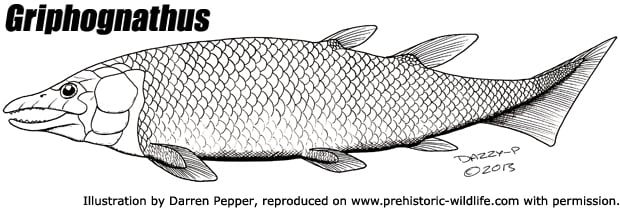
Griphognathus

Updated on

Benjamin Gutierrez

Vertebrate Paleontologist

Benjamin Gutierrez is a leading expert on dinosaurs, particularly the mighty theropods. His fieldwork in South America has uncovered new species and provided insights into dinosaur social structures.

Cite Feedback Print

Name

Griphognathus ‭(‬hook jaw‭)‬.

Phonetic

Named By

Classification

Chordata,‭ ‬Sarcopterygii,‭ ‬Dipnoi,‭ ‬Dipteriformes.

Diet

Carnivore/Piscivore.

Species

G. minutidens, G. sculpta, G. whitei‭

Size

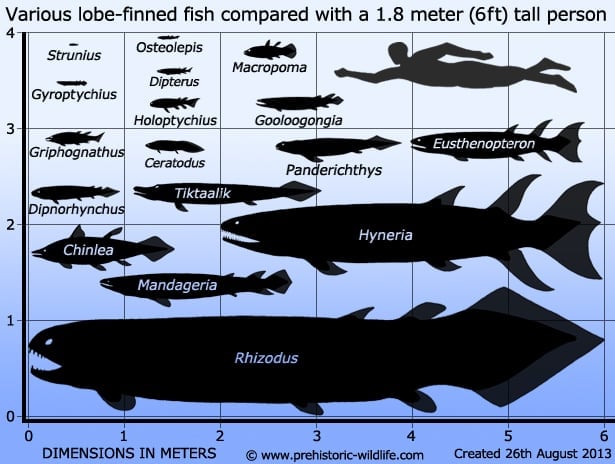
About‭ ‬60‭ ‬centimetres long.

Known locations

Australia and Germany.

Time Period

Late Devonian.

Fossil representation

Few specimens.

Griphognathus: Research Database

Theropoda · Cretaceous · Unknown


Research Note: Griphognathus was a theropoda from the Cretaceous of Unknown, providing important data on prehistoric life and ecosystem dynamics.


Research FindingStatusGradeYearMethodCitationImpact
Ørvig 1976: Griphognathus and related taxa
Zoologica Scripta
ConfirmedA1976FossilØrvig, Zoologica ScriptaTaxonomy
Campbell Barwick 2002: Griphognathus and related taxa
Records of the Western Australian Museum
ConfirmedC2002FossilCampbell Barwick, Records of the Western Australian MuseumTaxonomy
Status:
Confirmed Direct evidence
Grade:
A Strong consensus
B Good evidence


What We Still Do Not Know About Griphognathus

  • Complete skeletal morphology and ecological role.
  • Phylogenetic relationships within Theropoda.
  • Distribution and evolutionary history.

In Depth

       Griphognathus was an early lungfish,‭ ‬an identification which means that members of the genus may have been able to survive for short periods out of the water.‭ ‬The body is long with most of the fins being situated towards the rear,‭ ‬the pectoral fins being the obvious exception to this.‭ ‬The upper lobe of the tail is much more developed than the lower,‭ ‬suggesting that Griphognathus may have spent a lot of time near the bottom since the reduced lower lobe would then‭ ‬not be rubbing against hard obstacles.‭ ‬The name of‭ ‬the genus s derived from the hook-like shape of the jaws.

Further Reading

– Dipnoan (lungfish) skulls and the relationships of the group: a study based on new species from the Devonian of Australia. – Zoological Journal of the Linnean Society 61:1-328. – R. S. Miles – 1977.

Adopt A Species
prehistoric-wildlife new logo

Love this species?

Adopt it today!

(UPDATED!)

SPECIES SPOTLIGHT