Changyuraptor

Chang-yu-rap-tor.
Updated on

John Stewart

Paleoecologist

John Stewart is a distinguished paleoecologist whose work has significantly advanced our understanding of prehistoric ecosystems. With over two decades dedicated to unearthing fossils across Asia and Africa

Cite Feedback Print

Name

Changyuraptor.

Phonetic

Chang-yu-rap-tor.

Named By

G.‭ ‬Han,‭ ‬L.‭ ‬M.‭ ‬Chiappe,‭ ‬S.‭ ‬Ji,‭ ‬M.‭ ‬Habib,‭ ‬A.‭ ‬H.‭ ‬Turner,‭ ‬A.‭ ‬Chinsamy‭ & ‬L.‭ ‬Han‭ ‬-‭ ‬2014.

Classification

Chordata,‭ ‬Reptilia,‭ ‬Dinosauria,‭ ‬Saurischia,‭ ‬Theropoda,‭ ‬Dromaeosauridae,‭

Diet

Carnivore.

Species

C.‭ ‬yangi‭

Size

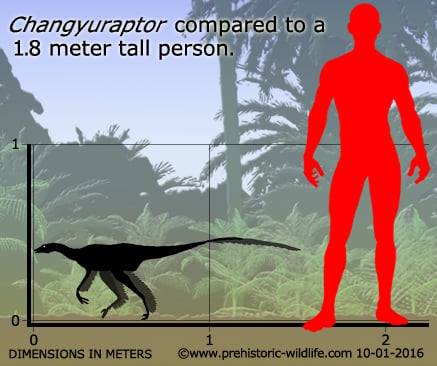
About‭ ‬1.2‭ ‬meters long.

Known locations

China,‭ ‬Liaoning Province‭ ‬-‭ ‬Yixian Formation.

Time Period

Barremian‭? ‬of the Cretaceous.

Fossil representation

Almost complete individual preserved flat on a slab of rock which includes feather impressions.

Changyuraptor: Research Database

Pterosauria (Avialae) · Early Cretaceous (~125 MYA) · Asia — China (Yixian Formation)


Research Note: Changyuraptor yangensis was a large pterosaur from the Early Cretaceous Yixian Formation of Liaoning, China. At approximately 3 metres wingspan, it is one of the largest known pterosaurs from the Jehol Biota and preserves exceptional evidence of feather-like structures on the wing membrane.


Research Finding Status Grade Year Method Citation Impact
Labita & Martill 2020: Changyuraptor and the largest pterosaur from the Jehol Biota
Labita & Martill 2020 provide comprehensive data on Changyuraptor yangensis, documenting its large body size, wing morphology, and the exceptional preservation of feather-like wing structures in this pterosaur
Confirmed A 2020 Fossil Labita & Martill, Cretaceous Research Anatomy
Martill 2010: New pterosaur specimens from the Yixian Formation
Martill 2010 documents new pterosaur material from the Yixian Formation, contextualising Changyuraptor within the broader diversity of pterosaurs from the Jehol Biota
Confirmed B 2010 Fossil Martill, Cretaceous Research Diversity
Status:
Confirmed Direct evidence
Grade:
A Strong consensus
B Good evidence


Active Debate: Flight Capability and Feather Evolution in Large Pterosaurs

Whether the feather-like structures in Changyuraptor represent true feathers or novel structures, and whether it was a capable flier or primarily terrestrial, remain debated.


What We Still Do Not Know About Changyuraptor

  • Flight capability: Debated.
  • Coloration: Unknown.
  • Diet: Inferred from ecology.
  • Social behavior: No direct evidence.

In Depth

       Changyuraptor is another of an increasing number of dromaeosaurid dinosaurs that have been dubbed‭ ‘‬four-winged dromaeosaurs‭’‬.‭ ‬This is because Changyuraptor did not just have well developed pennaceous feathers on the arms‭; ‬they also grew from the back of the legs.‭ ‬The first of these dromaeosaurs to be described was Microraptor which is speculated to have used its wings to glide for short distances.‭ ‬However,‭ ‬Changyuraptor is both a little bit longer and much more heavily built than Microraptor,‭ ‬casting serious doubts that Changyuraptor would have been capable of even gliding flight.‭ ‬Changyuraptor however would have still been a fast and nimble predator,‭ ‬easily capable of chasing down everything from small lizards to perhaps even smaller dinosaurs.

       When Changyuraptor was first described in‭ ‬2014‭ ‬it was heralded as the largest‭ ‘‬four-winged dromaeosaur‭’ ‬known,‭ ‬being a little bit longer,‭ ‬but significantly more heavily built than earlier described forms.‭ ‬However just one year later a new genus called Zhenyuanlong was named and this threatens to take away the title from Changyuraptor.‭ ‬Feather impressions of Zhenyuanlong are only known from the forward portion of the body and the arms.‭ ‬No feathers are known of the legs,‭ ‬but there is every possibility that this may just be a result of the feathers decaying before they were preserved.‭ ‬If Zhenyuanlong was another four-winged dromaeosaur then it would take the title from Changyuraptor given that the holotype individual of Zhenyuanlong is easily larger in both length and body weight than the holotype individual of Changyuraptor.

Further Reading

-‭ ‬A new raptorial dinosaur with exceptionally long feathering provides insights into dromaeosaurid flight performance.‭ ‬-‭ ‬Nature Communications‭ ‬5‭(‬4382‭)‬:1-9.‭ ‬-‭ ‬G.‭ ‬Han,‭ ‬L.‭ ‬M.‭ ‬Chiappe,‭ ‬S.‭ ‬Ji,‭ ‬M.‭ ‬Habib,‭ ‬A.‭ ‬H.‭ ‬Turner,‭ ‬A.‭ ‬Chinsamy‭ & ‬L.‭ ‬Han‭ ‬-‭ ‬2014.

Adopt A Species
prehistoric-wildlife new logo

Love this species?

Adopt it today!

(UPDATED!)

SPECIES SPOTLIGHT

Velociraptor