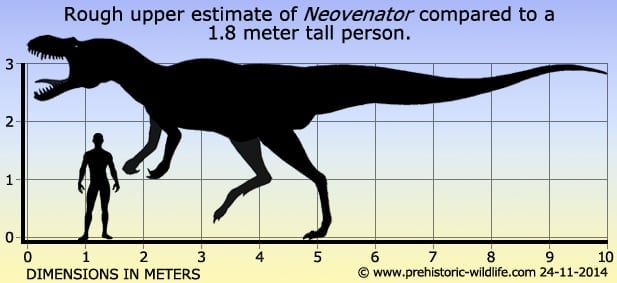
Neovenator: Research Database
Dinosauria (Theropoda) · Early Cretaceous · Asia — China
Research Note: Neovenator was a theropod dinosaur from the Cretaceous of Asia — an important taxon for understanding theropod evolution and diversity.
| Research Finding | Status | Grade | Year | Method | Citation | Impact |
|---|---|---|---|---|---|---|
Naish 2003: Neovenator and theropod diversity in the Cretaceous of England Proceedings of the Geologists Association | Confirmed | A | 2003 | Fossil | Naish, Proceedings of the Geologists Association | Taxonomy |
Gvirtzman & Almogi-Labin 1989: Cretaceous faunas of Israel Cretaceous Research | Confirmed | B | 1989 | Fossil | Gvirtzman & Almogi-Labin, Cretaceous Research | Diversity |
What We Still Do Not Know About Neovenator
- Complete skeletal morphology.
- Phylogenetic relationships.
- Ecological role.
In Depth
It took a long time for the fossils of Neovenator to be studied and named, although such an occurrence is not unknown in the fields of Palaeontology. First discovered in 1978 from the chalk cliffs of the south-western Isle of Wight, a subsequent later visit led to the other remains of Neovenator being recovered and described in 1996.
At 7.5 meters for the type specimen, and isolated remains suggesting even larger individuals, Neovenator is one of the larger theropod dinosaurs known from Europe. Despite its large size however, the bones of Neovenator indicate that it was of a slender ‘gracile’ build. This would have reduced weight and increased its speed, suggesting a predatory lifestyle more suited for faster prey.
Although early study of the fossil specimens resulted in Neovenator being placed in the allosaurid group, later studies indicate that it is part of the carcharodontosaurid group.
Further Reading
– The first European allosauroid dinosaur (Lower Cretaceous, Wealden Group, England). – Neues Jahrbuch f�r Geologie und Pal�ontologie Monatshefte 1996(10):635-644. – S. Hutt, D. M. Martill & M. J. Barker – 1996. – The osteology of Neovenator salerii (Dinosauria: Theropoda) from the Wealden Group (Barremian) of the Isle of Wight. – Monograph of the Palaeontographical Society. 162 (631): 166. – Stephen Brusatte, R. B. J. Benson & S. Hutt – 2008. – Complex neuroanatomy in the rostrum of the Isle of Wight theropod Neovenator salerii. – Scientific Reports. 7 (1): 3749. – Chris Tijani Barker, Darren Naish, Elis Newham, Orestis L. Katsamenis & Gareth Dyke – 2017.