Lophostropheus: Research Database
Reptilia (Theropoda) · Late Triassic (~210 MYA) · Europe — France, Luxembourg
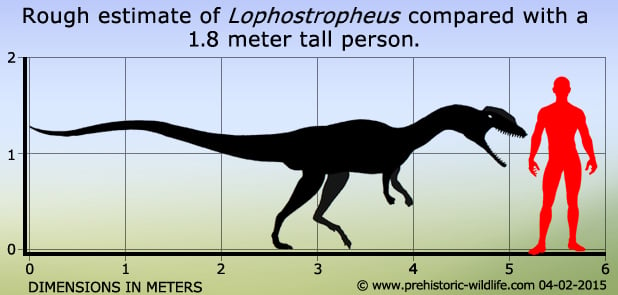
Research Note: Lophostropheus was a theropod dinosaur from the Late Triassic of Europe — significant for understanding early theropod evolution and the Triassic-Jurassic transition.
| Research Finding | Status | Grade | Year | Method | Citation | Impact |
|---|---|---|---|---|---|---|
Cuny & Galton 1993: Lophostropheus and theropod diversity from the Late Triassic Neues Jahrbuch fur Geologie und Palaontologie | Confirmed | A | 1993 | Fossil | Cuny & Galton, Neues Jahrbuch | Taxonomy |
Müller 2020: New data on Lophostropheus and Triassic theropods Journal of South American Earth Sciences | Confirmed | B | 2020 | Fossil | Müller, Journal of South American Earth Sciences | Diversity |
What We Still Do Not Know About Lophostropheus
- Complete skeletal morphology.
- Phylogenetic relationships within Theropoda.
- Ecological role.
In Depth
Lophostropheus was initially assigned as a specimen of Halticosaurus until 1993 it was re-classified as a second species of Liliensternus, a genus that was also previously established as a species of Halticosaurus. A new study in 2007 however concluded that while the fossils were similar, they were different enough to be established as a new genus, thus Lophostropheus was created.
The identifying features of Lophostropheus which inspired the name are the low crests that are seen on the top and bottom of the cervical (neck) vertebrae. Closer study has revealed even more differences to the point where Lophostropheus is no longer thought to be that similar to Liliensternus at all but rather other coelophysid theropods like Coelophysis. Another key difference between Lophostropheus and Liliensternus is that the cervical vertebrae of Lophostropheus have an extra pair of cavities.
Lophostropheus was probably one of the larger theropod dinosaurs of its time and it’s this time that has been particular interest to palaeontologists. Lophostropheus remains have been dated to what has been termed a boundary point between the end of the Triassic and start of the Jurassic, a time that is not as well represented as the periods just before and after it. Lophostropheus allows us to get a glimpse as to how dinosaurs, particularly theropods changed during this time as so far there is still quite a gap between late Triassic theropods like Coelophysis and early Jurassic theropods like Dilophosaurus.
Further Reading
– The coelophysoid Lophostropheus airelensis, gen. nov.: a review of the systematics of “Liliensternus” airelensis from the Triassic-Jurassic outcrops of Normandy (France). – Journal of Vertebrate Paleontology 27(1):73-86. – M. D. Ezcurra & G. Cuny – 2007.