Nesodactylus

In Depth        Nesodactylus was actually collected way back in 1918 by Barnum Brown, but it was not until the limestone blocks that the remains were in cased were dissolved in acid in 1966 that the remains became known. Not much can be said about the diet and lifestyle of Nesodactylus except that it was a … Read more
Scaphognathus

Scaphognathus: Research Database Rhamphorhynchidae (Pterosauria) · Late Jurassic (~150 MYA) · Europe — Germany (Solnhofen Limestone)   Research Note: Scaphognathus was a rhamphorhynchid pterosaur from the Late Jurassic Solnhofen Limestone of Germany. As one of the best-preserved Jurassic pterosaurs, it provides important data on pterosaur anatomy and flight mechanics.   Research Finding Status Grade Year … Read more

Batrachognathus

In Depth        As a member of the Anurognathidae, Batrachognathus is seen as being related to other pterosaurs such as Dendrorhynchoides, Jeholopterus and Anurognathus itself. Unfortunately Batrachognathus has also suffered from being damaged during the fossilisation process with the tall and broad skull being broken into several pieces as it lay under pressure in the lacustrine … Read more

Rhamphocephalus

In Depth        Because of the fragmentary nature of Rhamphocephalus specimens it is hard to determine the kind of pterosaur that it was in life. Also the poor preservation of the specimens have led many to doubt if they actually represent a new genus, in fact the term wastebasket taxon has been applied to Rhamphocephalus much … Read more

Pterorhynchus

In Depth        ‘Wing snout’ may be an unusual name, but this one is in reference to the tall head crest of Pterorhynchus, which in itself is unusual by its very presence in a rhamphorhynchoid pterosaur. This crest rose up from where the nostrils began, rising at a steep angle before curving round to join the … Read more

Dendrorhynchoides

In Depth        Dendrorhynchoides caused some confusion when it was first described because while the overall body morphology is that of an anurognathid,‭ ‬the long tail is not a recognised characteristic of the group.‭ ‬However the answer for this is a very simple one.‭ ‬The holotype was obtained from illegal fossil dealers who had added the … Read more

Comodactylus

In Depth        Not much can be said about Comodactylus because it is only known from a fourth metacarpal, the hyper extended finger that made up the outer trailing edge of the wing. The prooportions of the bones have at least indicated that Comodactylus belongs within the Rhamphorhynchoidea group of pterosaurs, although if the size estimates … Read more

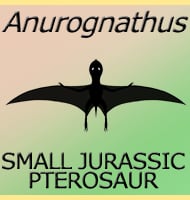
Anurognathus

anurognathus

In Depth        Anurognathus seems to have had a disproportionately large skull for such a small creature, but nevertheless, shows adaptations suited to an insectivorous diet. The teeth are small and sharp, and the head is wider than it is long. The eyes are also large and slightly face forwards allowing for some depth perception through … Read more

Preondactylus

Preondactylus: Research Database Pterosauria (Avialae) · Late Triassic (~215–210 MYA) · Europe — Italy (Dolomia di Forni Formation)   Research Note: Preondactylus was a pterosaur from the Late Triassic of northern Italy. As one of the oldest known pterosaurs, it provides critical data on the early evolution of powered flight in the Triassic.   Research … Read more

Cacibupteryx

In Depth        As a member of the rhamphorhynchoids, Cacibupteryx represents one of the more basal pterosaurs that were still common towards the end of the Jurassic. The jaws of Cacibupteryx are quite robust indicating that it was better adapted for more powerful prey than other more gracile pterosaurs. Further Reading – A new pterosaur from … Read more