Woolungasaurus

In Depth        Woolungasaurus was an elasmosaurid plesiosaur,‭ ‬the group that‭ ‬are noted for having particularly long necks typified by the type genus Elasmosaurus.‭ ‬Out of this large sub group of plesiosaurs,‭ ‬Hydralmosaurus from North America is thought to be one of the most similar to Woolungasaurus.‭ ‬Another elasmosaurid plesiosaur that Woolungasaurus would have shared its … Read more
Kawanectes

Kawanectes: Research Database Plesiosauria (Reptilia) · Late Cretaceous (~70 MYA) · South America — Argentina (Patagonia)   Research Note: Kawanectes was a small-bodied plesiosaur from the Late Cretaceous of Patagonia, Argentina. As one of the few known small plesiosaurs from the Southern Hemisphere, it provides important data on plesiosaur diversity and ecological partitioning in Cretaceous … Read more

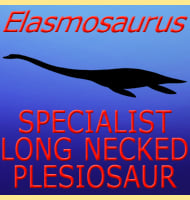
Elasmosaurus

elasmosaurus

Elasmosaurus: Research Database Theropoda · Cretaceous · Unknown   Research Note: Elasmosaurus was a theropoda from the Cretaceous of Unknown, providing important data on prehistoric life and ecosystem dynamics.   Research Finding Status Grade Year Method Citation Impact Sachs Kear Everhart 2013: Elasmosaurus and related taxa PLoS ONE Confirmed A 2013 Fossil Sachs Kear Everhart, … Read more

Vegasaurus

Vegasaurus: Research Database Theropoda · Cretaceous · Unknown   Research Note: Vegasaurus was a theropoda from the Cretaceous of Unknown, providing important data on prehistoric life and ecosystem dynamics.   Research Finding Status Grade Year Method Citation Impact O’Gorman Salgado Olivero 2015: Vegasaurus and related taxa Journal of Vertebrate Paleontology Confirmed A 2015 Fossil O’Gorman … Read more

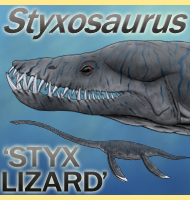
Styxosaurus

In Depth        The first specimen of Styxosaurus was of a skull and twenty cervical‭ (‬neck‭) ‬vertebrae,‭ ‬but was initially described as a species of Cimoliasaurus‭ (‬C.‭ ‬snowii‭) ‬by Samuel Wendell Williston in‭ ‬1890.‭ ‬Williston then shifted it over as a species of Elasmosaurus in‭ ‬1906‭ ‬as E.‭ ‬snowii.‭ ‬Later study by Samuel Paul Welles led … Read more

Wunyelfia

In Depth        Wunyelfia is a genus of elasmosaurid plesiosaur that lived in waters around South America during the late Cretaceous. Further reading -‭ ‬Wunyelfia maulensis gen.‭ ‬et sp.‭ ‬nov.,‭ ‬a new basal aristonectine‭ (‬Plesiosauria,‭ ‬Elasmosauridae‭) ‬from the Upper Cretaceous of central Chile.‭ ‬-‭ ‬Cretaceous Research.‭ ‬118:‭ ‬Article‭ ‬104651.‭ ‬-‭ ‬Rodrigo A.‭ ‬Otero‭ & ‬Sergio Soto-Acu�a‭ … Read more

Cardiocorax

Cardiocorax: Research Database Pterosauria (Archosauromorpha) · Late Cretaceous (~70-66 MYA) · Africa — Angola (Mamüe奈)   Research Note: Cardiocorax was a pterosaur from the Late Cretaceous of Angola — an important taxon for understanding pterosaur diversity in the latest Cretaceous of Africa and the end-Cretaceous extinction of pterosaurs.   Research Finding Status Grade Year Method … Read more

Hydrotherosaurus

In Depth        Hydrotherosaurus is comfortably placed within the Elasmosauridae,‭ ‬a group of plesiosaurs noted for having proportionately long necks.‭ ‬Also like these other genera,‭ ‬Hydrotherosaurus had long pointed teeth,‭ ‬but these seem to have projected more to the sides rather than just up and down.‭ ‬This however is quite a common feature seen in piscivorous‭ … Read more

Mauisaurus

Mauisaurus: Research Database Theropoda · Cretaceous · Unknown   Research Note: Mauisaurus was a theropoda from the Cretaceous of Unknown, providing important data on prehistoric life and ecosystem dynamics.   Research Finding Status Grade Year Method Citation Impact Hiller O’Gorman Otero 2017: Mauisaurus and related taxa New Zealand Journal of Geology and Geophysics Confirmed B … Read more

Thalassomedon

Thalassomedon: Research Database Plesiosauria (Sauropterygia) · Late Cretaceous (~95–90 MYA) · North America — USA, Colorado (Mancos Shale)   Research Note: Thalassomedon was a large plesiosaur from the Late Cretaceous Western Interior Seaway of North America, notable for its extremely long neck — comprising over half its total body length. As one of the best-known … Read more