Allenypterus

In Depth        Allenypterus is a genus of lobe finned fish that is known to have lived in the waters of what would become Montana during the Carboniferous.‭ ‬Allenypterus had a very deep body and reduced limbs,‭ ‬strongly suggesting that this fish was a slow swimmer and focused more towards manoeuvring in slow flowing or even … Read more
Chuanqilong

In Depth        Chuanqilong is a genus of ankylosaur that lived in China during the early Cretaceous. Further Reading -‭ ‬A New Basal Ankylosaurid‭ (‬Dinosauria:‭ ‬Ornithischia‭) ‬from the Lower Cretaceous Jiufotang Formation of Liaoning Province,‭ ‬China.‭ ‬-‭ ‬PLoS ONE‭ ‬9‭ (‬8‭)‬.‭ ‬-‭ ‬F.‭ ‬Han,‭ ‬W.‭ ‬Zheng,‭ ‬D.‭ ‬Hu,‭ ‬X.‭ ‬Xu‭ & ‬P.‭ ‬M.‭ ‬Barrett‭ ‬-‭ ‬2014.

Hemicyon

In Depth        Not to be confused with the bear dogs which‭ ‬were‭ ‬dog-like mammals that resembled bears‭; ‬Hemicyon was what is loosely termed a dog bear,‭ ‬which is a bear that is more dog-like.‭ ‬In simple terms,‭ ‬Hemicyon was more closely related to bears than dogs.‭ ‬Hemicyon had a very important difference between it and … Read more

Zhuchengceratops

In Depth        Zhuchengceratops was on the larger average size for known leptoceratopsid dinosaurs,‭ ‬and one of the most‭ ‬impressive features were the mandibles‭ (‬lower jaw bones‭)‬,‭ ‬which at fifty centimetres long and eighteen centimetres deep at the mid-point,‭ ‬were simply huge for a dinosaur of this size.‭ ‬These mandibles were about one and a half … Read more

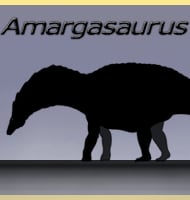
Amargasaurus

amargasaurus

In Depth        Amargasaurus has easily become one of the most popular dinosaurs thanks to the elongated neural spines of the neck vertebrae that are immediately apparent from even a casual glance at the skeleton of this dinosaur.‭ ‬Technically known as hemispinous processes,‭ ‬these spines rise up from the top of the vertebrae and are bifurcated,‭ … Read more

Cratochelone

In Depth        Though only known from partial remains,‭ ‬Cratochelone has been confirmed as being a protostegid turtle,‭ ‬and one that was very large in‭ ‬size.‭ ‬Though some researchers have credited Cratochelone as being only about‭ ‬two meters in length,‭ ‬the original and more recent studies have ascertained that Cratochelone may have actually reached up to … Read more

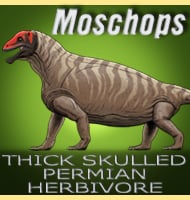
Moschops

moschops

In Depth        Moschops is a rare example of one of the few early mammal like reptiles that the general public are actually be aware of. This is in part due to its inclusion into most books about ancient animals, although a few people may actually remember watching the kids TV series ‘Moschops’ from the early … Read more

Wahlisaurus

In Depth        Originally discovered in‭ ‬1951,‭ ‬the holotype fossil of Wahlisaurus was not officially described until sixty-five years later in‭ ‬2016.‭ ‬Wahlisaurus is a leptonectid ichthyosaur noted for having a very long snout.‭ ‬Other ichthyosaurs similar to Wahlisaurus include Leptonectes,‭ ‬Eurhinosaurus and Excalibosaurus. Further Reading -‭ ‬A new leptonectid ichthyosaur from the Lower Jurassic‭ (‬Hettangian‭) … Read more

Ferrodraco

In Depth        Ferrodraco is a genus of pterosaur known to have lived in Australia during the late Cretaceous.‭ ‬Ferrodraco is an ornithocheird pterosaur,‭ ‬a type often associated with the sea,‭ ‬snatching fish from the water.‭ ‬Like many of its relatives,‭ ‬Ferrodraco had a crest rising up on the end of the snout,‭ ‬which in Ferrodraco … Read more

Malawisaurus

In Depth        Malawisaurus began its classification history as a species of Gigantosaurus,‭ ‬however this genus has had a long problematic history regarding its validity and further study towards the end of the twentieth century confirmed that material attributed to Gigantosaurus dixeyi actually belonged to a separate genus,‭ ‬and so Malawisaurus was created.        Malawisaurus was a … Read more