Coahuilaceratops

In Depth        Coahuilaceratops attained overnight fame amongst the ceratopsian dinosaurs because it is thought to have the longest brow horns of any within the group.‭ ‬Although no single complete horn has yet been found,‭ ‬palaeontologists studying Coahuilaceratops spent a lot of careful time and effort comparing the available material to other similar chasmosaurine ceratopsians to … Read more
Comahuesuchus

In Depth        Comahuesuchus is a notosuchian crocodile that lived in South‭ ‬America during the late Cretaceous period. The description of Anatosuchus in‭ ‬2003‭ ‬led to the idea that Anatosuchus and Comahuesuchus were close relatives,‭ ‬however a‭ ‬2006‭ ‬paper by Andrade,‭ ‬Bertini and Pinheiro came to the conclusion that they were not closely related.‭ ‬Instead a … Read more

Epihippus

In Depth        Although still a primitive horse the teeth of Epihippus show a trend more towards the grinding of grasses over the slicing of plant vegetation like leaves.‭ ‬This is a reaction to the changing ecosystems of the Eocene which saw the beginning of a reduction in forests with their subsequent replacement by grassy plains.‭ … Read more

Ganzhousaurus

In Depth        Ganzhousaurus is an oviraptorid dinosaur that displays a mix of primitive and advanced features which suggests that it is transitory in form between primitive oviraptorids that were around earlier in the Cretaceous,‭ ‬and more advanced ones alive later in the Cretaceous.‭ ‬Though since the fossils for Ganzhousaurus are from a Maastrichtian era deposit,‭ … Read more

Sinosaurus

In Depth        The history of Sinosaurus as a dinosaur taxon goes all the way back to‭ ‬1948‭ ‬when the genus was first formally described.‭ ‬However this description was based upon very partial remains something that meant the genus fell by the wayside in popularity stakes,‭ ‬with some‭ ‬palaeontologists even treating the Sinosaurus‭ ‬genus‭ ‬as a … Read more

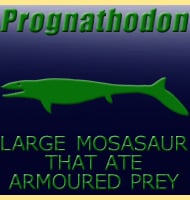
Prognathodon

prognathodon

In Depth        Prognathodon was a late mosasaur that showed a trend towards a different kind of predation that saw it living like the much earlier basal placodont reptiles of the Triassic such as Placodus.‭ ‬This means that Prognathodon specialised in eating tough shelled prey items like shellfish, ammonites and turtles.‭ ‬The diet of Prognathodon was … Read more

Barylambda

In Depth        The holotype fossils of Barylambda were originally assigned to another genus of pantodont called Titanoides until later study revealed them to be different enough to warrant the creation of a new genus.‭ ‬As a pantodont,‭ ‬Barylambda was a member of the first main group of mammals to evolve after the mass extinction of … Read more

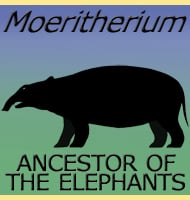
Moeritherium

moeritherium

In Depth        Although Moeritherium is popularly dubbed as a primitive elephant,‭ ‬it is not directly ancestral to today‭’‬s modern elephants.‭ ‬In fact in the past the elephants radiated out into a number of different families of varying forms,‭ ‬but like with other mammal groups most of these did survive into modern times.‭ ‬Hailing all the … Read more

Digalodon

In Depth        Digalodon is a genus dicynodont therapsid that lived in South Africa during the Permian. Further Reading -‭ ‬Some new fossil reptiles from the Karoo Beds of South Africa.‭ ‬-‭ ‬Proceedings of the Zoological Society of London‭ ‬118:392-407.‭ ‬-‭ ‬R.‭ ‬Broom‭ & ‬J.‭ ‬T.‭ ‬Robinson‭ ‬-‭ ‬1948. – Redescription of Digalodon rubidgei, an emydopoid … Read more

Eofelis

In Depth        Eofelis is one of‭ ‬the better known nimravids from Western Europe.‭ ‬Initially there was only one species but re-evaluation of the known fossils has determined that the larger specimens are actually those of a distinct species from the smaller remains,‭ ‬leading to the creation of E.‭ ‬giganteus. Further Reading – A new species … Read more