Anomalopteryx a.k.a.‭ ‬-‭ ‬Lesser Moa,‭ ‬Little Bush Moa,‭ ‬Bush Moa.

In Depth Originally named as a species of Dinornis by Richard Owen in‭ ‬1844,‭ ‬Anomalopteryx was established as a valid genus a few years later by Ludwig Reichenbach.‭ ‬ Different genera of moa are noted for specialising between differing habitats,‭ ‬and Anomalopteryx is so far known to have lived in lowland forests where it would have browsed upon shrubs and low growing trees.‭ … Read more

Estesia

In Depth        When first described Estesia was considered to be a member of the Varanoidea,‭ ‬the group that contains modern day monitor lizards‭ (‬i.e.‭ ‬lace monitor,‭ ‬komodo dragon,‭ ‬etc‭)‬.‭ ‬This relationship was based mostly upon the similarity of the jaws as well as the teeth which were sharp and recurved‭ (‬curve to face the back … Read more

Palaeocastor

In Depth        Palaeocastor is most famous for the elaborate spiral burrows‭ (‬popularly known as devil’s corkscrews‭) ‬that it actually dug out using its teeth instead of its claws.‭ ‬These burrows were discovered long before the first specimen of Palaeocastor was identified,‭ ‬and had previously been interpreted as being the fossilised remains of aquatic sponges or … Read more

Notohypsilophodon

In Depth        Notohypsilophodon is a genus of small ornithopod dinosaur that lived in South America during the late Cretaceous.‭ ‬Notohypsilophodon is so named based upon a superficial similarity to the genus Hypsilophodon while also recognising the more southern occurrence of this individual.‭ ‬Notohypsilophodon is so far only known from the partial remains of a juvenile,‭ … Read more

Caihong

In Depth        Caihong is a genus of anchiornithid dinosaur that lived in Asia during the late Jurassic.‭ ‬Caihong was a very small dinosaur,‭ ‬roughly about forty centimetres long in life.‭ ‬Caihong is noted for having feathers covering the entire body except for the snout and claws.‭ ‬Study of melanosome associated with Caihong show that in … Read more

Megacerops

In Depth        Since the early days of palaeontology many genera of brontotheres have been named from North America,‭ ‬though now after over one hundred and fifty years of continuous study and discovery,‭ ‬many of these have now been perceived to be synonymous with the genus Megacerops.‭ ‬Some of these names include genera such as Brontops … Read more

Protorosaurus

In Depth        Although known from other locations,‭ ‬Protorosaurus fossils are most common in Germany.‭ ‬This might suggest that Protorosaurus were more numerous there during the Permian,‭ ‬however it might also suggest that the conditions in Germany during the Permian were better for the fossilisation process to begin,‭ ‬therefore Germany might not have had a higher … Read more

Campinasuchus

In Depth        Campinasuchus is a genus of sebecosuchian crocodylomorph that lived in South America during the late Cretaceous.‭ ‬Unfortunately little is known about Campinasuchus,‭ ‬though the genus is thought to be related to Pissarrachampsa and Wargosuchus. Further Reading -‭ ‬Campinasuchus dinizi gen.‭ ‬et sp.‭ ‬nov.,‭ ‬a new Late Cretaceous baurusuchid‭ (‬Crocodyliformes‭) ‬from the Bauru Basin,‭ … Read more

Mauisaurus

In Depth        Discovered in New Zealand,‭ ‬Mauisaurus was for a long time credited as one of the largest plesiosaurs.‭ ‬However in more recent times there have been doubts about the validity of fossils attributed to the genus since these have come from so many different locations.‭ ‬Mauisaurus also displays the long sharp teeth often seen … Read more

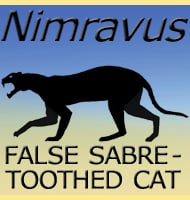
Nimravus

nimravus

In Depth Nimravus‭ ‬-‭ ‬Not a Cat‭!        Nimravus is the type genus of the‭ ‬Nimravidae group of mammals that are better known as the‭ ‘‬false sabre-toothed cats‭’‬.‭ ‬This is because while Nimravus and others like it looked like the big cats,‭ ‬they actually evolved from a different line of mammals than the true cats that … Read more