Reigomys

In Depth        Originally named as an extinct species of the extant genus Holochilus,‭ ‬Reigomys was a Pleistocene aged relative of modern day marsh rats that live in South America. Further Reading -‭ ‬A new species of Holochilus‭ (‬Rodentia:‭ ‬Sigmodontinae‭) ‬from the Middle Pleistocene of Bolivia and its phylogenetic significance‭ (‬subscription required‭)‬.‭ ‬-‭ ‬Journal of Vertebrate … Read more

Bakonybatrachus

In Depth        Bakonybatrachus was a frog genus that lived in Europe during the late Cretaceous,‭ ‬and although only known from partial remains,‭ ‬the shoulder indicates that in life the frog would have been a very good jumper and swimmer.‭ ‬Bakonybatrachus was named after the Bakony Mountains where the type fossils of the‭ ‬genus were found,‭ … Read more

Leidyosuchus

In Depth        Leidyosuchus is an often mentioned genus of alligator that is known to have lived in Canada during the late Cretaceous.‭ ‬With a skull about forty centimetres long,‭ ‬Leidyosuchus would be expected to have been a mid-sized alligator and predator of small mammals and quite possibly small dinosaurs too.        There were once many species … Read more

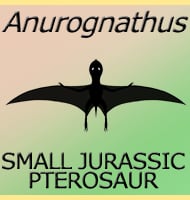
Anurognathus

anurognathus

In Depth        Anurognathus seems to have had a disproportionately large skull for such a small creature, but nevertheless, shows adaptations suited to an insectivorous diet. The teeth are small and sharp, and the head is wider than it is long. The eyes are also large and slightly face forwards allowing for some depth perception through … Read more

Draigwenia

In Depth        Draigwenia is a genus of pterosaur that lived in Europe during the early Cretaceous.‭ ‬Draigwenia is only known from a jaw fragment which over time has previously been attributed to Ornithocheirus,‭ ‬Amblydectes and Lonchodectes before being moved to a distinct genus in‭ ‬2021.‭ Further reading -‭ ‬On the validity of the genus Amblydectes … Read more

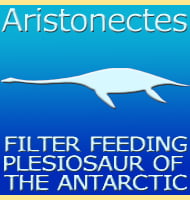
Aristonectes

aristonectes

In Depth        While the plesiosaurs are usually seen as predators of fish Aristonectes took‭ ‬the different and much more specialist path of filter feeder.‭ ‬The teeth in the jaws were very short with crowns that were less than one centimetre high.‭ ‬There were a high number of these teeth which were densely packed together in … Read more

Sektensaurus

In Depth        Sektensaurus is a genus of ornithopod dinosaur that lived in South America during the late Cretaceous. Further Reading -‭ ‬A new ornithopod dinosaur‭ (‬Dinosauria‭; ‬Ornithischia‭) ‬from the Late Cretaceous of central Patagonia.‭ ‬-‭ ‬Cretaceous Research.‭ ‬-‭ ‬Lďż˝cio M.‭ ‬Ibiricu,‭ ‬Gabriel A.Casal,‭ ‬Rubďż˝n D.‭ ‬Martďż˝nez,‭ ‬Marcelo Luna,‭ ‬Juan I.‭ ‬Canale,‭ ‬Bruno N.‭ ‬�lvarez‭ & … Read more

Ufudocyclops

In Depth        Ufudocyclops is a genus of dicynodont therapsid that lived in Southern Africa during the mid Triassic.‭ ‬Remains of several skulls of Ufudocyclops are known and these suggest that Ufudocyclops not only lacked tusks,‭ ‬but was completely toothless.‭ ‬Instead of teeth,‭ ‬Ufudocyclops seems to have had a‭ ‬large keratinous beak that was used to … Read more

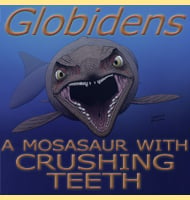
Globidens

globidens 1

In Depth        Although Globidens was not the only mosasaur to adapt to a diet of almost exclusively hard shelled animals,‭ ‬it does display perhaps the most specialised teeth.‭ ‬Rather than the sharp conical teeth seen in other mosasaurs such as Tylosaurus and Taniwhasaurus,‭ ‬Globidens had rounded teeth that had a‭ ‘‬globe shaped‭’‬ upper portion of … Read more

Reginaselache

In Depth        Reginaselache is an interesting find as the xenacanthid sharks are often associated with just Europe and North America,‭ ‬although remains are also known from India.‭ ‬With Reginaselache being discovered in Australia it would seem that the xenacanthids were possibly widespread across all the major continents.‭ ‬Xenacanthid sharks like Reginaselache were more eel-like in … Read more