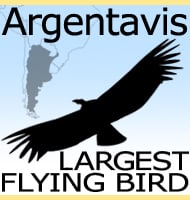
Argentavis

argentavis largest flying bird

Argentavis Fossil Map This interactive map shows all known fossil discovery sites of Argentavis magnificens. Click on the markers to explore details about each find, including the estimated age, and references. The accompanying bar chart visualizes fossil distribution over geological time range. Classification of Argentavis magnificens This is up-to-date classification of Argentavis magnificens Take off … Read more
Zhongornis

In Depth        Known from a single juvenile preserved on a slab,‭ ‬Zhongornis has been seen as an intermediary form between more primitive forms like Archaeopteyx which have long bony tails,‭ ‬and more advanced forms like Confuciusornis which had shorter bony tails. Further Reading -‭ ‬A new basal lineage of Early Cretaceous birds from China and … Read more

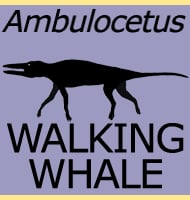
Ambulocetus

ambulocetus

In Depth        Ambulocetus is a very important transitional fossil as it displays the link between terrestrial mammals and the early whales.‭ ‬Ambulocetus acquired its name‭ ‬from the idea that it could‭ ‬both‭ ‬swim by undulating its back as well as leave the water and walk on land. However a 2016 study by Ando & Fujiwara … Read more

Chinlea

In Depth        Chinlea is one of the better known coelacanth genera from North America,‭ ‬though remains of this late Triassic aged fish are usually incomplete.‭ ‬The majority of currently known remains of Chinlea are known from the Chinle Formation‭ ‬of the USA,‭ ‬which is also the inspiration for the genus name.‭        Overall,‭ ‬Chinlea seems to … Read more

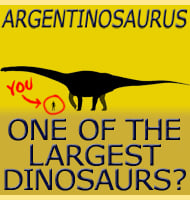
Argentinosaurus

Argentinosaurus

Argentinosaurus: Fossil Maps and Geological Chart Discover Argentinosaurus with our interactive fossil map and geographical timeline chart. The fossil map pinpoints discovery sites worldwide, click each marker to see fossil ages and detailed references.. The interactive bar chart reveals how many Argentinosaurus fossils were found across different geological ages, helping you visualize its prehistoric history … Read more

Vouivria

In Depth        Fossils of Vouivria were originally attributed to the dinosaur Bothriospondylus,‭ ‬however study of the fossils combined with the dubious status of Bothriospondylus meant that by the‭ ‬1980s the fossils that these fossils were no longer thought to be‭ ‬Bothriospondylus.‭ ‬In‭ ‬2017‭ ‬the fossils were used to describe their own genus,‭ ‬Vouivria.‭ ‬Vouivria was‭ … Read more

Delphyodontos

In Depth        Delphyodontos is a genus of fish that lived in North America during the Carboniferous.‭ ‬Most of the specimens of Delphyodontos are either of new born juveniles or actual aborted foetuses.‭ ‬New born Delphyodontos‭ ‬roughly resemble tadpoles with teeth shaped into beaks,‭ ‬but what is interesting about this genus is that while the young … Read more

Xiongguanlong

In Depth        Xiongguanlong is what is considered to be an intermediate tyrannosaur, larger than the earlier species, smaller than the larger ones like Gorgosaurus and Alioramus. Xiongguanlong has a long snout on what is a quite narrow skull for a tyrannosaurid. Further Reading – A longirostrine tyrannosauroid from the Early Cretaceous of China. – Proceedings … Read more

Parexus

In Depth        Parexus is a genus of acanthodian‭ (‬often dubbed spiny shark‭) ‬fish that lived in the waters of what is now Scotland during the early Devonian.‭ ‬Acanthodian fish are noted for their large spines which may have initially developed for defence against the mouths and throats of larger predators.‭ ‬However,‭ ‬some of these spines … Read more

Haestasaurus

In Depth        The holotype bones of Haestasaurus were originally found in‭ ‬1852‭ ‬by a man named Samuel Husband Beckles who found them exposed by a low tide on a coast not far from Hastings.‭ ‬These remains were studied by Gideon Mantell‭ (‬best remembered for naming Iguanodon‭) ‬who considered them to represent a second species ‭of … Read more