Mandasuchus

In Depth        Originally named as part of a doctorial dissertation by Alan J.‭ ‬Charig in‭ ‬1956,‭ ‬Mandasuchus was formally established as a distinct genus in‭ ‬2018.‭ ‬Mandasuchus is a genus of loricatan‭ ‬pseudosuchian that lived in Africa during the Triassic.‭ ‬Mandasuchus would have been a predator of other terrestrial animals,‭ ‬possibly up to equal size … Read more
Sclerocormus

In Depth        Sclerocormus is a genus of primitive ichthyosauromorph that lived in waters around Asia during the early Triassic.‭ ‬As a member of the group that was ancestral to the ichthyosaurs,‭ ‬Sclerocormus itself did‭ ‬not look that much like one.‭ ‬The body of Sclerocormus was quite stout and stocky,‭ ‬while the tail of the animal … Read more

Haptodus

In Depth        Easily one of the more common pelycosaurs in Europe,‭ ‬Haptodus was also‭ ‬one of the earliest with the first species appearing in the late Carboniferous period.‭ ‬Earlier species that appeared in the‭ ‬Carboniferous such as H.‭ ‬garnettensis were smaller at about seventy centimetres in length and were probably‭ ‬insectivores.‭ ‬By the early Permian … Read more

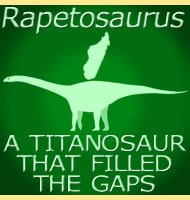
Rapetosaurus

rapetosaurus

In Depth        A very exciting find,‭ ‬the juvenile specimen of Rapetosaurus is to date the most complete titanosaurid skeleton ever found.‭ ‬This has allowed many of the gaps in the understanding of these dinosaurs to be filled in,‭ ‬including how the titanosaurs fit in among the sauropod group.‭ ‬This new understanding of titanosaur morphology has … Read more

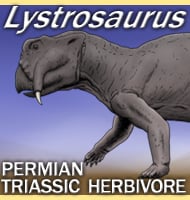
Lystrosaurus

lystrosaurus

In Depth        Lacking teeth in the usual sense,‭ ‬Lystrosaurus had two tusks,‭ ‬typical of the dicynodonts.‭ ‬These tusks projected downwards from the maxilla,‭ ‬and are thought to have been used to dig up the nutritious roots of plants that grew in the arid climates of the time.‭ ‬It is also thought that Lystrosaurus had a … Read more

Vivaxosaurus

In Depth        Vivaxosaurus is a genus of dicynodont that lived in Russia during the late Permian.‭ ‬As with relative genera,‭ ‬Vivaxosaurus would have been a quadrupedal herbivore,‭ ‬using two enlarged tusks in the upper jaw to dig out plants. Further Reading -‭ ‬A new Permian dicynodont and the question of the origin of the Kannemeyeroidae.‭ … Read more

Aspidorhynchus

In Depth        In the simplest terms,‭ ‬Aspidorhynchus was very similar to the modern day gar‭ (‬a.k.a.‭ ‬garpike‭) ‬fish that inhabit Central and North America as well as the Caribbean,‭ ‬and are noted for being very successful predators.‭ ‬The body is very long and slender with fairly small fins for the size but a‭ ‬fairly‭ ‬well-developed … Read more

Gobipteryx

In Depth        Gobipteryx is a genus of enantiornithine that lived in Mongolia during the late Cretaceous.‭ ‬Studies of Gobipteryx show that Gobipteryx would have been capable of flight soon after hatching out from the egg.‭ ‬This would have given‭ ‬Gobipteryx a significant survival advantage in a world heavily populated by small theropod dinosaurs.‭ ‬Studies of … Read more

Salishicetus

In Depth        Salishicetus is a genus of toothed baleen whale that lived during the Oligocene period. Further Reading – Salishicetus meadi,‭ ‬a new aetiocetid from the late Oligocene of Washington State and implications for feeding transitions in early mysticete evolution.‭ ‬-‭ ‬Royal Society Open Science‭ ‬5‭(‬4‭)‬:172336.‭ ‬-‭ ‬C.‭ ‬M.‭ ‬Peredo‭ & ‬N.‭ ‬D.‭ ‬Pyenson‭ ‬-‭ … Read more

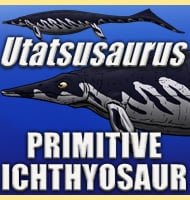
Utatsusaurus

utatsusaurus

In Depth        Utatsusaurus is an important entry in the fossil record concerning marine reptiles as it is often considered one of the first ichthyosaurs and as such it is used by some as the bench mark for identifying basal‭ (‬primitive‭) ‬features in ichthyosaurs.‭ ‬This includes skeletal features similar to diapsid reptiles,‭ ‬today the group that … Read more