Anchiceratops

In Depth        Studies of fossil sites where Anchiceratops remains have been found have revealed that Anchiceratops lived around estuaries.‭ ‬This may explain why Anchiceratopsremains are rare when compared to the remains of other ceratopsians known to live on open plains.‭ ‬As a chasmosaurine ceratopsian,‭ ‬Anchiceratops had a large neck frill surrounded with bony triangular projections,‭ … Read more

Chinshakiangosaurus

In Depth        Despite being a little known genus of sauropod dinosaur,‭ ‬Chinshakiangosaurus is one of the most important.‭ ‬This is because when it was described,‭ ‬Chinshakiangosaurus was the only example of an early sauropod dinosaur where the sides of the head can be reconstructed.‭ ‬This has revealed that although Chinshakiangosaurus was a sauropod,‭ ‬the lower … Read more

Albertosuchus

In Depth        Albertosuchus is a genus of crocodile that lived in Canada during the late Cretaceous,‭ ‬and which is noted for being similar to‭ ‬Arenysuchus,‭ ‬which is known from similarly aged fossil bearing deposits in Spain.‭ ‬Albertosuchus should not be confused with Albertosaurus,‭ ‬a tyrannosaurid dinosaur of the late Cretaceous,‭ ‬though it is not impossible … Read more

Atolchelys

In Depth        Atolchelys is a genus of side-necked turtle that lived in Brazil during the Cretaceous. Further Reading -‭ ‬Atolchelys lepida,‭ ‬a new side-necked turtle from the Early Cretaceous of Brazil and the age of crown Pleurodira.‭ ‬Biology Letters‭ ‬10‭(‬20140290‭)‬.‭ ‬-‭ ‬P.‭ ‬S.‭ ‬R.‭ ‬Romano,‭ ‬V.‭ ‬Gallo,‭ ‬R.‭ ‬R.‭ ‬C.‭ ‬Ramos‭ & ‬L.‭ ‬Antonioli‭ ‬-‭ … Read more

Dilophodelphis

In Depth        Dilophodelphis is a genus of river dolphin that lived during the Miocene.‭ ‬The genus name means two crested delphis‭ (‬delphis being a reference to the dolphin family‭)‬.‭ ‬This is because the skull of Dilophodelphis has two crests of bone. Further Reading -‭ ‬A new fossil dolphin Dilophodelphis fordycei provides insight into the evolution … Read more

Arctodus (Short faced bear)

In Depth Further Reading – A new record of giant short-faced bear, Arctodus simus, from western North America with a re-evaluation of its paleobiology. – Contributions in Science, Natural History Museum of Los Angeles County 371:1-12. – S. D. Emslie & N. J. Czaplewski – 1985. – The short-faced bear Arctodus simus from the late … Read more

Miodentosaurus

In Depth        Exact measurements of Miodentosaurus have been hard to establish,‭ ‬but this could be the largest thalattosaur genus there is.‭ ‬At the time of writing the next largest genus is Concavispina,‭ ‬which is confirmed to have at least grown to as big as‭ ‬3.64‭ ‬meters long.‭ ‬Like its smaller cousins,‭ ‬Miodentosaurus was a reptile … Read more

Allopleuron

In Depth        Allopleuron was a large sea turtle that swam in the late‭ ‬Cretaceous seas and may have had a cosmopolitan distribution at least across the Northern Hemisphere.‭ ‬Several species have been named in the past but today some only consider the type species A.‭ ‬hofmanni as valid.‭ ‬With remains possibly being as late as … Read more

Diegocanis

In Depth        Diegocanis is a genus of cynodont that lived in South America during the late Triassic.‭ ‬Diegocanis is similar to both Ecteninion‭ & ‬Trucidocynodon,‭ ‬and all of these genera fall within the Ecteniniidae. Further Reading -‭ ‬A new non-mammaliaform eucynodont from the Carnian-Norian Ischigualasto Formation,‭ ‬Northwestern Argentina.‭ ‬-‭ ‬Revista Brasileira de Paleontologia‭ ‬16:‭ ‬61.‭ … Read more

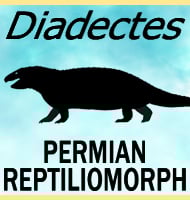
Diadectes

diadectes

In Depth        Diadectes was discovered and named twice by both Othniel Charles Marsh and Edward Drinker Cope, the two central players of the ‘bone wars’. Marsh named it Nothodon while five days later Cope released the name Diadectes. Normally under these circumstances, Nothodon would have precedence but in a twist, when they were synonymized in … Read more