Claosaurus

In Depth        First named as a species of Hadrosaurus by Othniel Charles Marsh in‭ ‬1872,‭ ‬Marsh later renamed this species as a distinct genus,‭ ‬Claosaurus in‭ ‬1890.‭ ‬A second species,‭ ‬C.‭ ‬affinis,‭ ‬is now considered to be highly dubious,‭ ‬not only upon the grounds that‭ ‬it was based upon very fragmentary toe bones,‭ ‬but that … Read more

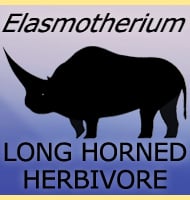
Elasmotherium

elasmotherium

In Depth        Elasmotherium is one of the a typical animals that represents Pleistocene era fauna,‭ ‬though there has been a lot of debate over not only how it lived but what it really looked like One problematic area concerning the study of Elasmotherium is the actual morphology of the genus.‭ ‬Some reconstructions consider Elasmotherium to … Read more

Coelodonta (Woolly Rhino)

In Depth Further Reading -Nuevas aportaciones al conocimiento de Coelodonta antiquitatis (Blumenbach, 1799) de Brown Bank, Mar del Norte [New contributions to the knowledge of Coelodonta antiquitatis (Blumenbach, 1799) Brown Bank, North Sea] – Bulletin Centre d’Est. Natura B-N. VII 13): 309-329 Sta. Coloma de Gramenet – David Garcia Fernďż˝ndez & Juan Vicente i Castells … Read more

Arcovenator

In Depth        Arcovenator is a genus of abelisaurid theropod dinosaur that lived in what is now France during the late cretaceous.‭ ‬Although only known from partial remains,‭ ‬similarities to relative genera such as Majungasaurus from Madagascar,‭ ‬as well as Indosaurus and Rajasaurus from India have been made.‭ ‬Comparison to these others‭ ‬has led to speculation … Read more

Tsaagan

In Depth        Originally thought to be another specimen of Velociraptor,‭ ‬a CAT scan in‭ ‬1998‭ ‬revealed that the fossil was of a new though closely related genus.‭ ‬Additional study of Tsaagan has indicated that it is most closely related to Linheraptor.‭ ‬Tsaagan probably lived and hunted like most other small Asian dromaeosaurids,‭ ‬hunting either other … Read more

Aspidosaurus

In Depth        A possible close relative of the genus Cacops,‭ ‬Aspidosaurus is noted for having a single row of bony armour plates than ran down its spine.‭ ‬Aspidosaurus had fairly slender teeth that were the same size throughout the mouth.‭ ‬These were probably used to seize small animals such as fish,‭ ‬amphibians and possible early … Read more

Casineria

In Depth        Analysis of the location of the find suggests that Casineria lived in a dry environment and was quite possibly one of the first amniotes, laying eggs on dry land as opposed to having to return to the water for spawning. Because Casineria had claws, it would already have the genetic requirement to form … Read more

Archaeornithomimus

In Depth        In‭ ‬1972‭ ‬Dale Russel was undertaking a study of the ornithomimid dinosaurs which saw some of the focus fall upon Ornithomimus.‭ ‬After studying the fossils of this genus he discovered that while some of them were not attributable to Ornithomimus,‭ ‬but were of an unknown ornithomimid dinosaur.‭ ‬However while Russel correctly identified a … Read more

Propliopithecus

In Depth        Like with Pliopithecus,‭ ‬the genus after which it was named,‭ ‬Propliopithecus was a gibbon-like ape that lived in Northeast Africa during the early Oligocene‭ (‬back in this time Egypt had an extensive covering of vegetation unlike the arid desert conditions that we know today‭)‬.‭ ‬Propliopithecus would have lived in the tree canopy where … Read more

Wyleyia

In Depth        Wyleyia is a genus of very primitive bird that lived in England during the early Cretaceous. Further Reading -‭ ‬Wyleyia:‭ ‬a new bird humerus from the Lower Cretaceous of England.‭ ‬Palaeontology‭ ‬16‭(‬4‭)‬:721-728.‭ ‬-‭ ‬C.‭ ‬J.‭ ‬O.‭ ‬Harrison‭ & ‬C.‭ ‬A.‭ ‬Walker‭ ‬-‭ ‬1973.