Adocus

Ad-o-kuss.
Updated on

John Stewart

Paleoecologist

John Stewart is a distinguished paleoecologist whose work has significantly advanced our understanding of prehistoric ecosystems. With over two decades dedicated to unearthing fossils across Asia and Africa

Cite Feedback Print

Name

Adocus.

Phonetic

Ad-o-kuss.

Named By

Classification

Chordata,‭ ‬Reptilia,‭ ‬Testudines,‭ ‬Cryptodira,‭ ‬Adocidae,‭ ‬Adocinae.

Diet

Omnivore.

Species

A.‭ ‬beatus

Size

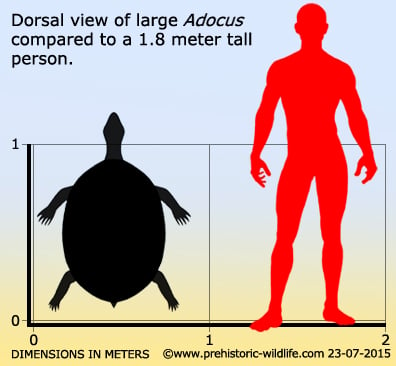
Shells up to‭ ‬80‭ ‬centimetres long.

Known locations

Canada,‭ ‬Alberta‭ ‬-‭ ‬Dinosaur Park Formation,‭ ‬Foremost Formation,‭ ‬Oldman Formation‭; ‬Saskatchewan‭ ‬-‭ ‬Ravenscrag Formation.‭ ‬China‭ ‬-‭ ‬Youganwo Formation.‭ ‬Japan‭ ‬-‭ ‬Kitadani Formation,‭ ‬Sengoku Formation,‭ ‬Tamagawa Formation.‭ ‬Kazakhstan‭ ‬-‭ ‬Bostobe Formation,‭ ‬Syuksyuk Formation‭ ‬.‭ ‬Mexico‭ ‬-‭ ‬Cerro del Pueblo Formation.‭ ‬Mongolia‭ ‬-‭ ‬Barun Goyot Formation,‭ ‬Baynshire Formation,‭ ‬Dohoin Usu Formation.‭ ‬Tajikistan‭ ‬-‭ ‬Palvantash Formation,‭ ‬Yalovach Formation.‭ ‬USA,‭ ‬Arizona‭ ‬-‭ ‬Fort Crittenden Formation‭; ‬Colorado‭ ‬-‭ ‬Laramie Formation‭; ‬Maryland‭ ‬-Brightseat Formation‭; ‬Missouri‭ ‬-‭ ‬Ripley Formation‭; ‬Montana‭ ‬-‭ ‬Hell Creek Formation,‭ ‬Judith River Formation‭; ‬New Jersey‭ ‬-‭ ‬Hornerstown Formation,‭ ‬Navesink Formation,‭ ‬Marshalltown Formation‭; ‬New Mexico‭ ‬-‭ ‬Fruitland Formation,‭ ‬Kirtland Formation‭; ‬North Carolina‭ ‬-‭ ‬Tar Heel Formation‭; ‬North Dakota‭ ‬-‭ ‬Hell Creek Formation‭; ‬South Carolina‭ ‬-‭ ‬Rhems Formation,‭ ‬Williamsburg Formation‭; ‬South Dakota‭ ‬-‭ ‬Hell Creek Formation‭; ‬Texas‭ ‬-‭ ‬Aguja Formation‭; ‬Utah‭ ‬-‭ ‬Masuk Formation‭; ‬Wyoming‭ ‬-‭ ‬Ferris Formation,‭ ‬Lance Formation.‭ ‬Uzbekistan‭ ‬-‭ ‬Bissekty Formation,‭ ‬Khodzhakul Formation,‭ ‬Sultanbobin Formation.

Time Period

Barremian of the Early Cretaceous through to the end of the Oligocene.

Fossil representation

Multiple specimens,‭ ‬some almost complete.

Adocus: Research Database

Adocidae (Cryptodira) · Late Cretaceous (~70–66 MYA) · North America, Asia


Research Note: Adocus was a cryptodiran turtle from the Late Cretaceous of North America and Asia. As a member of the Adocidae family, it provides important data on turtle diversity and paleobiogeography across the Late Cretaceous, a period of significant climatic and geographic change.


Research Finding Status Grade Year Method Citation Impact
Syromyatnikova & Danilov 2013: Adocus and turtle diversity in the Cretaceous of Asia and North America
Syromyatnikova & Danilov 2013 provide comprehensive data on Adocus from the Late Cretaceous of Asia and North America, establishing it as an adocid cryptodiran and documenting its significance for understanding turtle diversity and transcontinental biogeographic connections in the Late Cretaceous
Confirmed A 2013 Fossil Syromyatnikova & Danilov, Cretaceous Research Taxonomy
Syromyatnikova & Danilov 2013: Additional data on adocid turtles from the Cretaceous of Eurasia
Syromyatnikova & Danilov 2013 provide additional data on adocid turtle diversity and morphological variation, further contextualising Adocus within the broader evolutionary history of cryptodiran turtles
Confirmed B 2013 Fossil Syromyatnikova & Danilov, Proceedings of the Zoological Institute RAS Diversity
Status:
Confirmed Direct evidence
Grade:
A Strong consensus
B Good evidence


Active Debate: Turtle Biogeography and Transcontinental Exchange in the Late Cretaceous

Whether Adocus represents a single species with a transcontinental distribution spanning both Asia and North America, or whether specimens from these continents represent distinct but closely related species, is debated. Some researchers argue that the presence of virtually identical Adocus shells in both continents supports frequent faunal exchange via Beringia, while others suggest morphological differences warrant species-level separation.

The habitat preferences and ecological role of Adocus are also contested — whether it was primarily aquatic, semi-aquatic, or terrestrial remains uncertain, with shell morphology providing ambiguous ecological signals compared to modern turtle analogs.


What We Still Do Not Know About Adocus

  • Complete shell morphology: Well known from multiple specimens.
  • Habitat preference: Aquatic vs. terrestrial debated.
  • Diet: Likely omnivorous; direct evidence lacking.
  • Geographic variation: Asian vs. North American specimens need detailed comparison.

In Depth

       Adocus is a genus of freshwater cryptodiran turtle that lived in both Asia and North America.‭ ‬Most Canadian and American fossils are confirmed as coming from Cretaceous deposits,‭ ‬however some fossils‭ ‬are determined‭ ‬as coming from‭ ‬deposits after the Cretaceous,‭ ‬with some as recent as the late Oligocene.‭ ‬Adocus is known to have inhabited freshwater where it is thought to have had an omnivorous diet.

Further Reading

-‭ ‬On some Cretaceous Reptilia.‭ ‬-‭ ‬Proceedings of the Academy of Natural Sciences of Philadelphia‭ ‬20:233-242.‭ ‬-‭ ‬Edward Drinker Cope‭ ‬-‭ ‬1868. -‭ ‬Reptilian faunas of the Torrejon,‭ ‬Puerco,‭ ‬and underlying Upper Cretaceous formations of San Juan County,‭ ‬New Mexico.‭ ‬-‭ ‬United States Geological Survey Professional Paper‭ ‬119:1-68.‭ ‬-‭ ‬C.‭ ‬W.‭ ‬Gilmore‭ ‬-‭ ‬1919. -‭ ‬The skeletal morphology of the Cretaceous cryptodiran turtle,‭ ‬Adocus,‭ ‬and the relationships of the Trionychoidea.‭ ‬-‭ ‬American Museum novitates,‭ ‬no.‭ ‬2941.‭ ‬-‭ ‬Peter Andre Meylan‭ & ‬Eugene S.‭ ‬Gaffney‭ ‬-‭ ‬1989. -‭ ‬New taxa of Mesozoic turtles from Mongolia.‭ ‬-‭ ‬Fossil Turtle Research‭ ‬1:119-127.‭ ‬-‭ ‬V.‭ ‬B.‭ ‬Sukhanov‭ & ‬P.‭ ‬Narmandakh‭ ‬-‭ ‬2006. -New Material and a Revision of Turtles of the Genus Adocus‭ (‬Adocidae‭) ‬from the Late Cretaceous of Middle Asia and Kazakhstan.‭ ‬-‭ ‬Proceedings of the Zoological Institute RAS Vol.‭ ‬313,‭ ‬No.‭ ‬1,‭ ‬рр.‭ ‬74‭–‬94.‭ ‬-‭ ‬E.‭ ‬V.‭ ‬Syromyatnikova‭ & ‬I.‭ ‬G.‭ ‬Danilov‭ ‬-‭ ‬2009. -‭ ‬The first‭ ‘‬true‭’ ‬Adocus‭ (‬Testudines,‭ ‬Adocidae‭) ‬from the Paleogene of Asia.‭ ‬-‭ ‬Journal of Vertebrate paleontology‭ ‬-‭ ‬Igor Gennadievich Danilov,‭ ‬Elena Syromyatnikova,‭ ‬Pavel P.‭ ‬Skutschas,‭ ‬T.‭ ‬M.‭ ‬Kodrul‭ & ‬Jianhua Jin‭ ‬-‭ ‬2013. -‭ ‬A new species of the genus Adocus‭ (‬Adocidae,‭ ‬Testudines‭) ‬from the Lower Cretaceous of Southwest Japan.‭ ‬-‭ ‬Paleontological Research‭ ‬19‭(‬1‭)‬:26-32.‭ ‬-‭ ‬T.‭ ‬Sonoda,‭ ‬R.‭ ‬Hirayama,‭ ‬Y.‭ ‬Okazaki‭ & ‬H.‭ ‬Ando‭ ‬-‭ ‬2015.

Adopt A Species
prehistoric-wildlife new logo

Love this species?

Adopt it today!

(UPDATED!)

SPECIES SPOTLIGHT

Archaeocursor Asiaticus